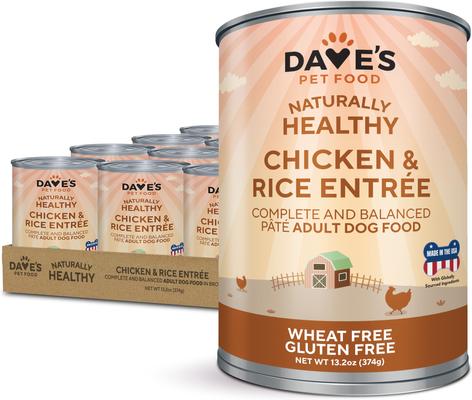
Naturally Healthy Chicken & Rice Recipe Pate Canned Wet Dog Food, 13.2-oz can, case of 12
Graded by The Sniff System
Dave's Pet Food Naturally Healthy Chicken & Rice Recipe Pate is a wet food in a can, built around chicken as its primary protein.
This recipe offers reasonable protein quality, with chicken providing solid amino acid coverage. It also includes dried egg product, which adds diverse, high-bioavailability protein to the formula.
The absence of an AAFCO statement means its nutritional completeness is unverified. The recipe also lacks a declared omega-3 source and contains carrageenan, which some studies link to gastrointestinal inflammation.
Hard to recommend for any dog, especially given the lack of an AAFCO statement and the presence of carrageenan.
Summary written by The Sniff System from the data above. Same rubric, same drivers, expressed in English.
Good fit for active large sporting breeds like Labrador Retrievers, Golden Retrievers, and English Setters navigating skin allergies. The protein deck is limited to chicken and dried egg product. For Labrador Retrievers with suspected cutaneous adverse food reactions, a strict elimination diet trial must last a minimum of 8 weeks to reliably diagnose or rule out a food-based trigger. The National Research Council (2006) recommends a minimum of 2.6 grams of linoleic acid (an omega-6) per 1000 kcal of metabolizable energy to maintain skin barrier function in adult dogs (NRC, 2006) .
Looking at this for adult Labrador Retrievers or Labrador Retrievers with skin allergies ? We are building dedicated pages for these combinations.
Auto-matched from this product's measurements (ingredients, life stage, calorie density) to a breed archetype. Not a substitute for vet input on your specific dog.
Sniff scored this formula 39/100, landing in D-tier territory. The biggest contributor was protein quality (+14 points): Reasonable protein quality. chicken delivers solid amino acid coverage. A hard cap of 59 also applied because the AAFCO nutritional adequacy statement isn't disclosed on the retailer page (so our methodology can't verify the formula meets adult, growth, or all-life-stages standards). Even without the cap, the base component scores sit below the next band. The structural fix would need to address fat quality as well.
Reasonable protein quality. chicken delivers solid amino acid coverage.
Includes egg, named fish, or organ meat for diverse high-bioavailability protein.
No declared omega-3 source. Fish oil, salmon oil, and algae oil all absent.
No AAFCO statement. Nutritional completeness unverified.
- Lowest fat quality in Dave's Pet Food's lineup (4/16)
- Top 1% for DMB fat in grain-inclusive wet foods (36.4%)
- Bottom 10% for overall Sniff Score in wet foods (39/100)
Computed against the rest of our catalog. Percentiles refresh on each catalog update.
Similar dog foods worth considering
Three lenses on products with formulation profiles similar to this one.
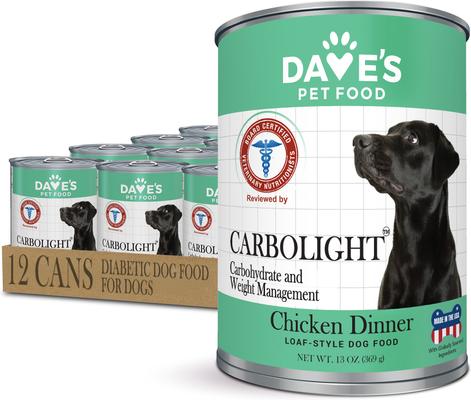
Dave's Pet Food Carbolight Carbohydrate & Weight Management Diabetic Support Adult Low-Glycemic Chicken Pate Canned Wet Dog Food, Chicken Dinner, 13-oz, case of 12
Scores 28 points higher with a similar formulation profile.
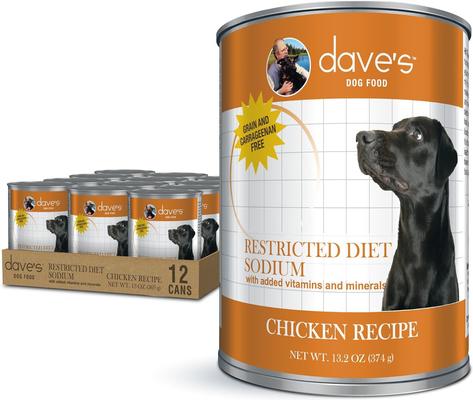
Dave's Pet Food Restricted Sodium Chicken Recipe Grain-Free Wet Dog Food, 13.2-oz can, 12 count
$3.64/lb vs your seed's $3.84/lb (5% less) at a comparable score.
Surfaced from a vector similarity search across 3,491 scored dog foods. How this works.
Controversial ingredients · 1
- carrageenanSeaweed-derived thickener; some studies link it to gastrointestinal inflammation. Most common in wet foods but appears in some kibble gravies.
Every flagged ingredient has a published basis (confirmed harm / regulatory action / precautionary). See methodology →
Wet and fresh foods contain more water than kibble (typically 65-78%). On a dry-matter basis, this food's protein content is roughly 41%, comparable to premium kibble (typically 30-45% DMB protein).
Read why each ingredient is good or bad for dogs.
- 1protein animalchicken
Real meat. Primary protein source, with the amino acid profile dogs actually evolved to eat.
Position 1: primary protein source. After cooking removes water, this may drop in proportional weight, but it anchors the recipe.
- 2water sufficient for processing
The regulatory phrase for cooking water in wet food. Has no nutritional implication, just labeling formality.
- 3brewers rice
Broken rice kernels left over from milling, usually destined for human beer-making. Cheaper than whole or even white rice. Same carbs, less nutrition than the brown version. See why →
Position 3: major carbohydrate source.
- 4dried egg product
Whole eggs with the water removed. Same nutritional value as fresh eggs, just shelf-stable.
Position 4: significant protein contributor. Adds amino-acid diversity to the top of the deck.
- 5fiberguar gum
Thickener common in wet food. Emerging research on emulsifiers and the gut microbiome, but no smoking gun in dogs yet. See why →
Position 5: functional fiber for digestion or satiety.
- 6mineralpotassium chloride
Required mineral. Sometimes used as a salt substitute. Standard inclusion in complete diets.
- 7othernatural flavor
Legal term for animal-derived flavoring, usually hydrolyzed liver or broth. Adds taste, says nothing about quality.
- 8mineralsalt
Sodium chloride. Required at small doses for normal physiology. Not a quality concern in standard amounts.
- 9othercarrageenan Flagged
Seaweed-derived thickener. Some lab studies suggest gut inflammation, but the evidence in pets is mixed. See why →
- 10supplementcholine chloride
Essential nutrient for liver and brain function. Standard inclusion in complete dog foods.
- 11vitaminvitamin e supplement
Required nutrient and a natural antioxidant. Often pulls double duty as a preservative.
- 12a
- 13b12
- 14d3 supplements
- 15vitaminthiamine mononitrate
B vitamin (B1). Essential for nervous system function. Cooked-in vitamin loss is why thiamine is always added back.
- 16vitaminbiotin
B vitamin that supports skin and coat health. Required for AAFCO-complete formulas.
- 17vitaminriboflavin supplement
B vitamin (B2). Required in complete dog foods. The standardized form ensures consistent dosing.
14 of 17 ingredients have a curated note. Coverage grows over time.