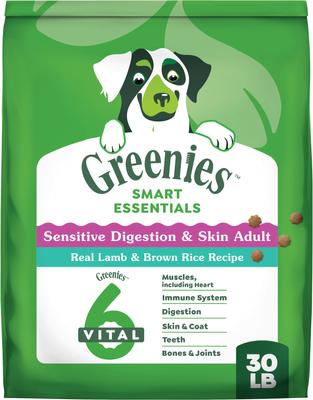
Smart Essentials Sensitive Digestion & Skin Real Lamb & Brown Rice Dry Dog Food, 30-lb bag
Graded by The Sniff System
Greenies Smart Essentials Sensitive Digestion & Skin Real Lamb & Brown Rice Dry Dog Food is a dry food featuring lamb and chicken as its main protein sources.
This formula offers good protein quality, with lamb providing solid amino acid coverage. It also includes quality carbohydrate sources with fermentable fiber and named fat sources like chicken fat, plus marine oil for EPA and DHA.
The main thing to note is the absence of an AAFCO statement, which means the nutritional completeness of this formula is unverified.
Good fit for dogs with sensitive digestion or skin, given its ingredient profile. Less ideal if you require verified nutritional completeness for your dog.
Summary written by The Sniff System from the data above. Same rubric, same drivers, expressed in English.
Neutral fit for adult Beagles. Lamb leads the deck at position 1, 27% DMB protein, 17% DMB fat.
Looking at this for adult Beagles ? We are building dedicated pages for these combinations.
Auto-matched from this product's measurements (ingredients, life stage, calorie density) to a breed archetype. Not a substitute for vet input on your specific dog.
Middle-of-pack grade. 59/100 (C) reflects the structural fit of this formula against The Sniff System's eight scoring components. Protein quality did the heavy lifting (+19.5 points): Reasonable protein quality. lamb delivers solid amino acid coverage. What capped it: the score can't exceed 59 because the AAFCO nutritional adequacy statement isn't disclosed on the retailer page (so our methodology can't verify the formula meets adult, growth, or all-life-stages standards). How it could climb: the brand publishing the AAFCO statement, which would lift the cap into B-band range.
Reasonable protein quality. lamb delivers solid amino acid coverage.
Quality carbohydrate sources with fermentable fiber.
Quality fat sources: named fat with marine oil (EPA and DHA source).
No AAFCO statement. Nutritional completeness unverified.
Similar dog foods worth considering
Three lenses on products with formulation profiles similar to this one.
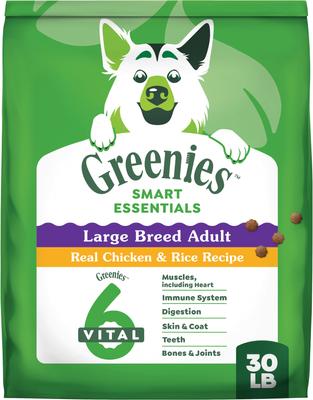
Surfaced from a vector similarity search across 3,491 scored dog foods. How this works.
Read why each ingredient is good or bad for dogs.
- 1protein animallamb
Real meat. Often used for dogs with chicken or beef sensitivities. Slightly higher fat content than chicken.
Position 1: primary protein source. After cooking removes water, this may drop in proportional weight, but it anchors the recipe.
- 2protein animalchicken meal
Chicken with the water cooked out. Per pound, packs more protein than fresh chicken. See why →
Position 2: co-primary protein. Two named animal proteins in the top 2 is a strong protein build.
- 3grainbrown rice
Whole grain that's easy to digest. Steady carb energy plus a little fiber.
Position 3: major carbohydrate source.
- 4brewers rice
Broken rice kernels left over from milling, usually destined for human beer-making. Cheaper than whole or even white rice. Same carbs, less nutrition than the brown version. See why →
Position 4: supporting grain. Smaller contribution to the carb deck.
- 5grainsorghum
Whole grain with a low glycemic index. Gluten-free, well-tolerated, decent fiber content.
Position 5: supporting grain. Smaller contribution to the carb deck.
- 6fatchicken fat
Despite the name, a high-quality energy source. Concentrated calories plus essential fatty acids like linoleic acid. See why →
Position 6: secondary fat. Often where marine oils sit when present alongside a primary land-animal fat.
- 7grainbarley
Whole grain with a low glycemic profile and some soluble fiber. Easy on blood sugar.
Position 7: supporting grain. Smaller contribution to the carb deck.
- 8protein plantpea protein
Concentrated plant protein. Inflates the protein number on the label without matching the amino acid quality of meat.
Position 8. Moderate inclusion. Contributes carbohydrate and some plant protein.
- 9dried egg product
Whole eggs with the water removed. Same nutritional value as fresh eggs, just shelf-stable.
Position 9: supporting protein. Modest contribution to total protein weight.
- 10dried plain beet pulp
Beet fiber, with the sugar removed. Long unfairly maligned. It's a real soluble fiber that supports stool quality. See why →
Position 10: functional fiber for digestion or satiety.
- 11othernatural flavors
Same as natural flavor. Usually hydrolyzed liver or broth, adds palatability.
- 12fatflaxseed
Plant source of omega-3. Helpful for skin and coat, though dogs absorb omega-3 from fish more efficiently.
Position 12: trace fat. Below the level that materially shifts the fat profile.
- 13fatfish oil
Concentrated omega-3s. The reason 'EPA' and 'DHA' get to show up on the bag.
Position 13. Trace marine oil. Contributes some omega-3 but well below the level that drives EPA/DHA totals.
- 14mineralpotassium chloride
Required mineral. Sometimes used as a salt substitute. Standard inclusion in complete diets.
- 15preservative naturalcitric acid
Natural antioxidant preservative. Helps keep fats from going rancid.
Natural preservative. Methodologically preferred over synthetic alternatives.
- 16preservative naturalmixed tocopherols
Natural vitamin E used to keep fats from going rancid. The good kind of preservative. See why →
- 17supplementdl-methionine
Essential amino acid. Often added when plant proteins dominate, since methionine is naturally lower in pulses than meat.
- 18probioticdried bacillus subtilis fermentation product
- 19supplementcholine chloride
Essential nutrient for liver and brain function. Standard inclusion in complete dog foods.
- 20vitaminvitamin e supplement
Required nutrient and a natural antioxidant. Often pulls double duty as a preservative.
- 21l-ascorbyl-2-polyphosphate
A stable form of vitamin C used in pet food. Provides antioxidant support and survives processing better than plain ascorbic acid.
- 22mineralferrous sulfate
Inorganic iron. Standard mineral source. Iron proteinate is the gentler, better-absorbed premium form.
- 23zinc oxide
Inorganic zinc. Cheapest mineral form on the market. Functional but less bioavailable than chelated alternatives.
- 24mineralsodium selenite Flagged
Inorganic selenium. Effective at AAFCO levels, no documented safety concern in dogs despite what some pet food blogs claim. Selenium yeast is a marginal upgrade, not a necessity. See why →
- 25vitamind-calcium pantothenate
B vitamin (B5). Standard inclusion in complete dog foods.
Showing first 25 of 39. Position 1-5 has the largest weight in the recipe.
24 of 25 ingredients have a curated note. Coverage grows over time.