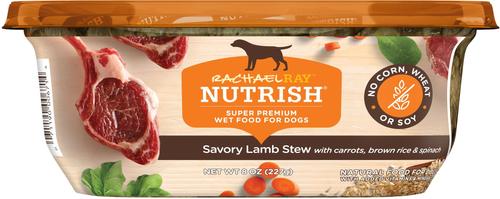
Savory Lamb Stew Wet Dog Food, 8-oz tub, case of 8
Graded by The Sniff System
Rachael Ray Nutrish Savory Lamb Stew Wet Dog Food is a wet stew in a tub, primarily featuring lamb and chicken.
This food has a strong protein profile, with lamb as a primary ingredient, which means good biological value. It also includes quality fat sources, like marine oil, providing beneficial EPA and DHA. Plus, the carbohydrate sources are good and include declared fiber.
The biggest watch item is the absence of an AAFCO statement, meaning its nutritional completeness is unverified. This food also contains menadione, a synthetic vitamin K3, which is banned in human supplements due to toxicity concerns.
Good fit for adult dogs who enjoy a wet stew. Less ideal if you prefer foods with a verified AAFCO statement or without synthetic vitamin K3.
Summary written by The Sniff System from the data above. Same rubric, same drivers, expressed in English.
Neutral fit for moderately active toy breeds, including the Cavalier King Charles Spaniel, at the adult life stage. Chicken broth leads the deck at position 1, 41% DMB protein, 23% DMB fat.
Looking at this for adult Cavalier King Charles Spaniels ? We are building dedicated pages for these combinations.
Auto-matched from this product's measurements (ingredients, life stage, calorie density) to a breed archetype. Not a substitute for vet input on your specific dog.
Middle-of-pack grade. 58/100 (C) reflects the structural fit of this formula against The Sniff System's eight scoring components. Protein quality did the heavy lifting (+21 points): Strong protein profile with lamb as the primary ingredient, delivering high biological value. What capped it: the score can't exceed 59 because the AAFCO nutritional adequacy statement isn't disclosed on the retailer page (so our methodology can't verify the formula meets adult, growth, or all-life-stages standards). How it could climb: the brand publishing the AAFCO statement, which would lift the cap into B-band range.
Strong protein profile with lamb as the primary ingredient, delivering high biological value.
Quality fat sources: named fat with marine oil (EPA and DHA source).
Quality carbohydrate sources with declared fiber.
No AAFCO statement. Nutritional completeness unverified.
Contains menadione. Banned for human OTC use but tolerated at AAFCO-permitted levels in pet food. The only AAFCO-permitted vitamin K source..
- Top 10% for protein quality in Rachael Ray Nutrish's lineup (21.2/27)
- Top quartile for DMB protein in Rachael Ray Nutrish's lineup (40.9%)
- Top quartile for crude fiber in wet foods (9.1% DMB)
Computed against the rest of our catalog. Percentiles refresh on each catalog update.
Similar dog foods worth considering
Three lenses on products with formulation profiles similar to this one.
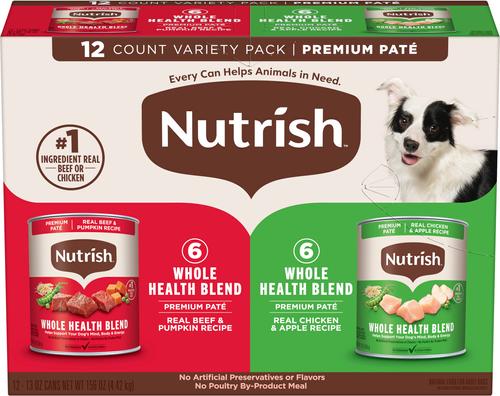
Rachael Ray Nutrish Premium Pate Variety Pack Wet Dog Food, 13-oz can, case of 12
$2.94/lb vs your seed's $4.98/lb (41% less) at a comparable score.
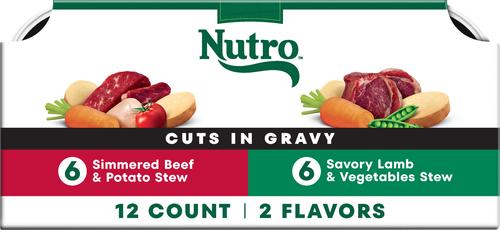
Nutro Grain-Free Simmered Beef Stew & Savory Lamb Stew Cuts in Gravy Variety Pack Adult Wet Dog Food Trays, 3.5-oz, case of 12
Chicken instead of lamb, 10 points lower, different brand.
Surfaced from a vector similarity search across 3,491 scored dog foods. How this works.
Controversial ingredients · 1
- menadioneSynthetic vitamin K3. Banned in human supplements due to toxicity concerns at high doses. Permitted in pet food but premium brands use natural vitamin K alternatives.
Every flagged ingredient has a published basis (confirmed harm / regulatory action / precautionary). See methodology →
Wet and fresh foods contain more water than kibble (typically 65-78%). On a dry-matter basis, this food's protein content is roughly 41%, comparable to premium kibble (typically 30-45% DMB protein).
Read why each ingredient is good or bad for dogs.
- 1chicken broth
Real broth, adds flavor and moisture. Negligible nutrition on its own but tells you the recipe leans on real meat.
Position 1: primary protein source. After cooking removes water, this may drop in proportional weight, but it anchors the recipe.
- 2protein animallamb
Real meat. Often used for dogs with chicken or beef sensitivities. Slightly higher fat content than chicken.
Position 2: co-primary protein. Two named animal proteins in the top 2 is a strong protein build.
- 3dried egg product
Whole eggs with the water removed. Same nutritional value as fresh eggs, just shelf-stable.
Position 3: significant protein contributor. Adds amino-acid diversity to the top of the deck.
- 4protein animalchicken
Real meat. Primary protein source, with the amino acid profile dogs actually evolved to eat.
Position 4: significant protein contributor. Adds amino-acid diversity to the top of the deck.
- 5egg white
Position 5: significant protein contributor. Adds amino-acid diversity to the top of the deck.
- 6protein plantpea protein
Concentrated plant protein. Inflates the protein number on the label without matching the amino acid quality of meat.
Position 6. Moderate inclusion. Contributes carbohydrate and some plant protein.
- 7ground tapioca
Starch from cassava root. Highly digestible energy source, but pure starch with minimal nutrition beyond that.
- 8othernatural flavor
Legal term for animal-derived flavoring, usually hydrolyzed liver or broth. Adds taste, says nothing about quality.
- 9vegetablecarrots
Real vegetable. Fiber, beta-carotene, and a small amount of antioxidant value.
Position 9: garnish-level inclusion. Marketing-prominent but minimal nutritional impact at this position.
- 10grainbrown rice
Whole grain that's easy to digest. Steady carb energy plus a little fiber.
Position 10: minor grain inclusion.
- 11mineraldicalcium phosphate
Calcium and phosphorus combined. Required source of both minerals, especially in formulas without much bone content.
- 12fiberguar gum
Thickener common in wet food. Emerging research on emulsifiers and the gut microbiome, but no smoking gun in dogs yet. See why →
Position 12: trace fiber inclusion.
- 13mineralpotassium chloride
Required mineral. Sometimes used as a salt substitute. Standard inclusion in complete diets.
- 14vegetablespinach
Leafy green. Some iron, vitamin K, and fiber. The dose in kibble is small but it's real food.
Position 14: garnish-level inclusion. Marketing-prominent but minimal nutritional impact at this position.
- 15supplementcholine chloride
Essential nutrient for liver and brain function. Standard inclusion in complete dog foods.
- 16mineralsalt
Sodium chloride. Required at small doses for normal physiology. Not a quality concern in standard amounts.
- 17mineralmagnesium sulfate
Source of magnesium, a required mineral. Standard inclusion in complete diets.
- 18mineralcalcium carbonate
Source of calcium. Functional. Required in complete dog foods, especially those without bone-in meat meals.
- 19caramel
- 20fatfish oil
Concentrated omega-3s. The reason 'EPA' and 'DHA' get to show up on the bag.
- 21mineralzinc proteinate
Zinc bound to protein for better absorption. The premium form of the mineral, versus zinc oxide which sits cheaper on the label.
- 22mineraliron proteinate
Iron bound to protein for better absorption. The premium form versus inorganic iron sulfate.
- 23celery powder
- 24vitaminvitamin e supplement
Required nutrient and a natural antioxidant. Often pulls double duty as a preservative.
- 25l-ascorbyl-2-polyphosphate
A stable form of vitamin C used in pet food. Provides antioxidant support and survives processing better than plain ascorbic acid.
Showing first 25 of 40. Position 1-5 has the largest weight in the recipe.
22 of 25 ingredients have a curated note. Coverage grows over time.