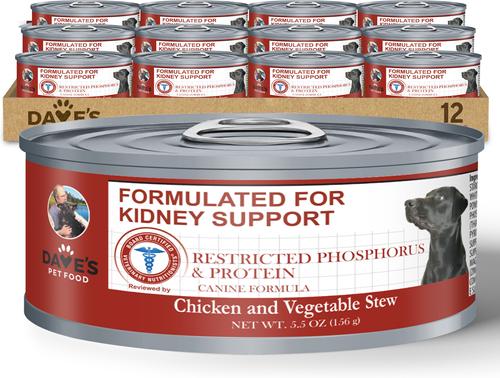
Kidney Support with Low Phosphorus & Low Protein Chicken & Vegetable Stew Wet Dog Food, 5.5-oz can, case of 12
Graded by The Sniff System
Dave's Pet Food Kidney Support is a wet food, a chicken and vegetable stew, formulated with low phosphorus and protein for specific dietary needs.
This formula uses quality carbohydrate sources that provide fermentable fiber. It also includes quality fat sources like named fat and marine oil for EPA and DHA, plus chicken liver and egg white powder for diverse, high-bioavailability protein.
The score is capped due to three watch ingredients, though they aren't specified. There's also no AAFCO statement, and both protein and fat levels are quite low on a dry matter basis at 13.9% each.
Good fit for dogs needing kidney support with low phosphorus and protein. Less ideal if you prioritize a food with an explicit AAFCO statement.
Summary written by The Sniff System from the data above. Same rubric, same drivers, expressed in English.
Frenchies have notoriously sensitive GI tracts plus a tendency toward obesity given their low activity needs. Limited-ingredient formulas with moderate calorie density tend to fit them well. Good fit for lower-energy small companion breeds like French Bulldogs, Bulldogs, and Boston Terriers navigating a sensitive stomach. Chicken leads at position 2.
Looking at this for adult French Bulldogs or French Bulldogs with a sensitive stomach ? We are building dedicated pages for these combinations.
Auto-matched from this product's measurements (ingredients, life stage, calorie density) to a breed archetype. Not a substitute for vet input on your specific dog.
Research informing this analysis
MethodologyThe Sniff System grades this product against 3 cited studies relevant to its profile. Each link opens the original source.
- NRC, 2006digestibility · fiber· cited in 2 claims
- AAFCO, 2024zinc
- Swanson et al., 2002prebiotics
Every claim on Sniff traces to a source. If you find a citation that's wrong, outdated, or misapplied, tell us.
At 41/100, this formula sits below where we look for everyday picks. The lift comes from carbohydrate quality, worth 15 points to the final number: Quality carbohydrate sources with fermentable fiber. The ceiling on this score is 49, set because the guaranteed analysis falls below AAFCO's minimum nutrient profile. The cap isn't the binding constraint here. The component scores would also need to improve to reach the next band.
Quality carbohydrate sources with fermentable fiber.
Quality fat sources: named fat with marine oil (EPA and DHA source).
Includes egg, named fish, or organ meat for diverse high-bioavailability protein.
- Top quartile for crude fiber in Dave's Pet Food's lineup (11.1% DMB)
- Bottom quartile for DMB fat in Dave's Pet Food's lineup (13.9%)
- Top quartile for carb quality in Dave's Pet Food's lineup (15/16)
Computed against the rest of our catalog. Percentiles refresh on each catalog update.
Similar dog foods worth considering
Three lenses on products with formulation profiles similar to this one.
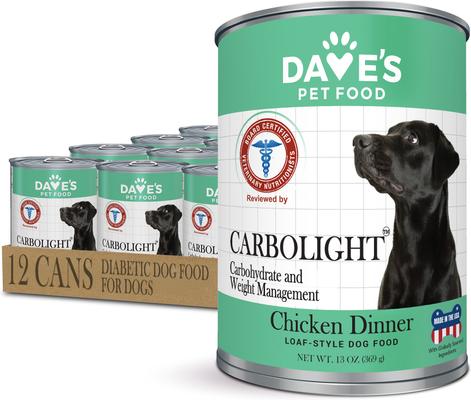
Dave's Pet Food Carbolight Carbohydrate & Weight Management Diabetic Support Adult Low-Glycemic Chicken Pate Canned Wet Dog Food, Chicken Dinner, 13-oz, case of 12
Scores 26 points higher with a similar formulation profile.
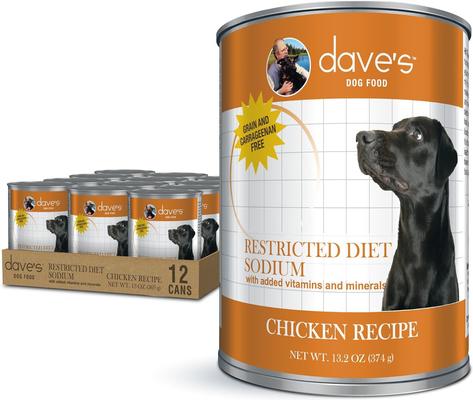
Dave's Pet Food Restricted Sodium Chicken Recipe Grain-Free Wet Dog Food, 13.2-oz can, 12 count
$3.64/lb vs your seed's $8.00/lb (55% less) at a comparable score.
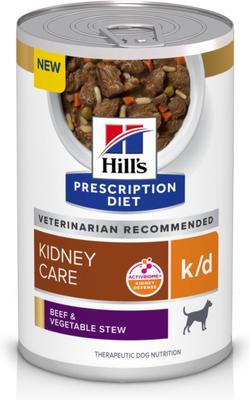
Hill's Prescription Diet k/d Kidney Care Beef & Vegetable Stew Wet Dog Food, 12.5-oz can, case of 12
Beef instead of chicken, 8 points higher, different brand.
Surfaced from a vector similarity search across 3,491 scored dog foods. How this works.
Wet and fresh foods contain more water than kibble (typically 65-78%). On a dry-matter basis, this food's protein content is roughly 14%, comparable to premium kibble (typically 30-45% DMB protein).
Read why each ingredient is good or bad for dogs.
- 1water sufficient for processing
The regulatory phrase for cooking water in wet food. Has no nutritional implication, just labeling formality.
- 2protein animalchicken
Real meat. Primary protein source, with the amino acid profile dogs actually evolved to eat.
Position 2: co-primary protein. Two named animal proteins in the top 2 is a strong protein build.
- 3tapioca starch
Refined cassava starch, used as a binder. Easy to digest, low on nutrition.
- 4vegetablecarrots
Real vegetable. Fiber, beta-carotene, and a small amount of antioxidant value.
Position 4: meaningful whole-food inclusion. Source of vitamins, antioxidants, or natural fiber.
- 5grainbrown rice
Whole grain that's easy to digest. Steady carb energy plus a little fiber.
Position 5: supporting grain. Smaller contribution to the carb deck.
- 6protein animalchicken liver
Organ meat. Dense in protein, iron, vitamin A, and the B vitamins. Among the most nutrient-rich ingredients a dog can eat.
Position 6. Functional organ inclusion. Adds amino acids and micronutrients even at smaller weight.
- 7legumepeas
Cheap protein bulk. Fine in small amounts, but when peas stack with lentils and chickpeas in the top ingredients, it's the pattern the FDA flagged in its heart-disease investigation. See why →
Position 7. Moderate inclusion. Contributes carbohydrate and some plant protein.
- 8fatchicken fat
Despite the name, a high-quality energy source. Concentrated calories plus essential fatty acids like linoleic acid. See why →
Position 8: trace fat. Below the level that materially shifts the fat profile.
- 9egg white powder
Position 9: supporting protein. Modest contribution to total protein weight.
- 10othernatural flavor
Legal term for animal-derived flavoring, usually hydrolyzed liver or broth. Adds taste, says nothing about quality.
- 11protein plantpotato protein
Concentrated potato protein. Like pea protein, it inflates the protein number without matching meat-quality amino acids.
Position 11: trace plant protein.
- 12fatsunflower oil
Common plant oil. Useful in moderation for omega-6, though too much skews the omega ratio against the dog's favor.
Position 12: trace fat. Below the level that materially shifts the fat profile.
- 13fiberpowdered cellulose
Plant fiber, often from wood pulp. Cheap bulk filler. Not harmful, but a tell that the recipe is reaching for inexpensive bulk.
Position 13: trace fiber inclusion.
- 14dextrose
- 15yeast extract
Yeast broken down to a paste. Strong palatant plus a real source of B vitamins.
- 16mineraltricalcium phosphate
Calcium and phosphorus source. Same role as dicalcium phosphate, slightly different ratio.
- 17fatfish oil
Concentrated omega-3s. The reason 'EPA' and 'DHA' get to show up on the bag.
- 18mineralpotassium chloride
Required mineral. Sometimes used as a salt substitute. Standard inclusion in complete diets.
- 19fiberinulin
Prebiotic fiber that feeds beneficial gut bacteria. Same compound found in chicory root.
- 20vitaminthiamine mononitrate
B vitamin (B1). Essential for nervous system function. Cooked-in vitamin loss is why thiamine is always added back.
- 21vitaminniacin supplement
B vitamin (B3). Required in complete dog foods, added as a supplement to standardize the dose.
- 22vitaminvitamin a supplement
Vitamin A in stable, standardized form. Required for vision, immune function, and growth.
- 23vitaminpyridoxine hydrochloride
B vitamin (B6). Essential for protein metabolism. Standard inclusion in complete formulas.
- 24vitamind-calcium pantothenate
B vitamin (B5). Standard inclusion in complete dog foods.
- 25vitaminriboflavin supplement
B vitamin (B2). Required in complete dog foods. The standardized form ensures consistent dosing.
Showing first 25 of 44. Position 1-5 has the largest weight in the recipe.
23 of 25 ingredients have a curated note. Coverage grows over time.