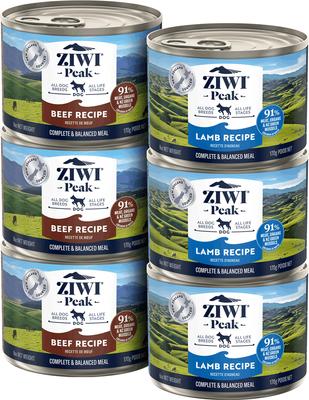
Peak Variety Pack Adult Grain-Free Beef, Lamb Pate Canned Dog Food, 6-oz can, case of 6
Graded by The Sniff System
ZIWI Peak Variety Pack Adult Grain-Free Beef, Lamb Pate Canned Dog Food is a wet pate, primarily featuring beef, formulated for adult dogs.
This food has a strong protein profile, with beef as the first ingredient, providing high biological value. It also includes a good variety of organ meats like beef lung, kidney, and liver, plus green mussel, which adds diverse, highly bioavailable protein sources.
The main thing to note is the absence of a declared omega-3 source, like fish oil or algae oil, in the ingredient list. Nothing else concerning in the deck.
Good fit for adult dogs who thrive on a high-quality, organ-rich protein diet. Less ideal if you're looking for a declared omega-3 source.
Summary written by The Sniff System from the data above. Same rubric, same drivers, expressed in English.
In its 2022 update on diet-associated DCM, the FDA identified Golden Retrievers as the most reported breed, with 121 cases out of 1,382 total canine reports (8.8%) received between January 1, 2014, and November 1, 2022 (FDA, 2022) . Good fit for adult Golden Retrievers and similar active sporting breeds navigating diet-associated DCM concerns. Beef anchors position 1, with one pulse (chickpeas at position 6), plus beef kidney at position 4 (a natural taurine precursor).
Looking at this for adult Golden Retrievers or Golden Retrievers with diet-associated DCM concerns ? We are building dedicated pages for these combinations.
Auto-matched from this product's measurements (ingredients, life stage, calorie density) to a breed archetype. Not a substitute for vet input on your specific dog.
Research informing this analysis
MethodologyThe Sniff System grades this product against 3 cited studies relevant to its profile. Each link opens the original source.
- FDA, 2022cardiac · epidemiology · breed predisposition· cited in 5 claims
- FDA, 2019diet composition· cited in 2 claims
- NRC, 2006nutrient bioavailability
Every claim on Sniff traces to a source. If you find a citation that's wrong, outdated, or misapplied, tell us.
At 61/100, this formula lands in solid B territory. The lift comes from protein quality, worth 21 points to the final number: Strong protein profile with beef as the primary ingredient, delivering high biological value. Where it lost ground: fat quality, costing 8 points. No declared omega-3 source. Fish oil, salmon oil, and algae oil all absent.
Strong protein profile with beef as the primary ingredient, delivering high biological value.
Includes egg, named fish, or organ meat for diverse high-bioavailability protein.
AAFCO formulation inferred from declared adult maintenance. Verbatim statement not published by retailer.
No declared omega-3 source. Fish oil, salmon oil, and algae oil all absent.
- Lowest fat quality in ZIWI's lineup (4/16)
- Top quartile for overall Sniff Score in ZIWI's lineup (61/100)
- Bottom 10% for DMB fat in ZIWI's lineup (25.0%)
Computed against the rest of our catalog. Percentiles refresh on each catalog update.
Similar dog foods worth considering
Three lenses on products with formulation profiles similar to this one.
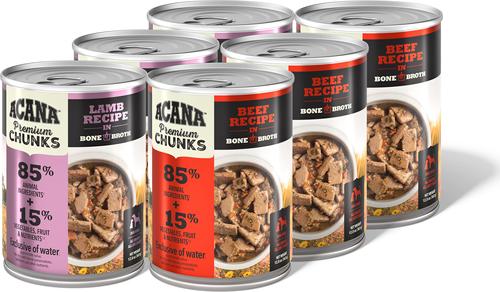
ACANA Premium Beef & Lamb Chunks in Bone Broth Variety Pack Grain-Free Wet Dog Food, 12.8-oz can, case of 6
Scores 13 points higher with a similar formulation profile.
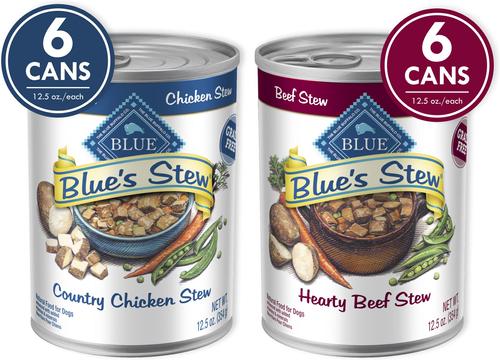
Blue Buffalo Blue's Stews Grain-Free Chicken & Beef Variety Pack Adult Wet Dog Food, 12.5-oz can, case of 12
$3.75/lb vs your seed's $12.88/lb (71% less) at a comparable score.

ACANA Premium Chunks Lamb in Bone Broth Grain-Free Wet Dog Food, 12.8-oz can, case of 12
Lamb instead of beef, 13 points higher, different brand.
Surfaced from a vector similarity search across 3,491 scored dog foods. How this works.
Wet and fresh foods contain more water than kibble (typically 65-78%). On a dry-matter basis, this food's protein content is roughly 41%, comparable to premium kibble (typically 30-45% DMB protein).
Read why each ingredient is good or bad for dogs.
- 1protein animalbeef
Real meat. Dense in protein and iron. Some dogs are sensitive to it, but for most it's an excellent base.
Position 1: primary protein source. After cooking removes water, this may drop in proportional weight, but it anchors the recipe.
- 2water sufficient for processing
The regulatory phrase for cooking water in wet food. Has no nutritional implication, just labeling formality.
- 3beef lung
Organ meat. Lean, protein-dense, real-food inclusion. More common in raw and freeze-dried diets.
Position 3: significant protein contributor. Adds amino-acid diversity to the top of the deck.
- 4protein animalbeef kidney
Organ meat. Dense in B vitamins, iron, and trace minerals. Among the most nutritious ingredients on any label.
Position 4. Named organ meat this high is a strong build choice. Concentrated source of taurine, glutamine, and B-vitamins.
- 5beef tripe
Stomach lining. Strong-smelling but nutrient-dense, with natural digestive enzymes.
Position 5. Named organ meat this high is a strong build choice. Concentrated source of taurine, glutamine, and B-vitamins.
- 6legumechickpeas
Also called garbanzo beans. Affordable plant protein source, part of the legume stack the FDA examined in its heart-disease investigation. See why →
Position 6. Moderate inclusion. Contributes carbohydrate and some plant protein.
- 7protein animalbeef liver
Organ meat. Among the most nutrient-dense ingredients available, rich in B vitamins, iron, and vitamin A.
Position 7. Functional organ inclusion. Adds amino acids and micronutrients even at smaller weight.
- 8green mussel
Mussel from New Zealand. Natural source of glucosamine and omega-3s. Common in joint-support formulas.
- 9beef bone
Position 9: supporting protein. Modest contribution to total protein weight.
- 10beef cartilage
Position 10: supporting protein. Modest contribution to total protein weight.
- 11lecithin
Natural emulsifier, usually from soy or sunflower. Helps blend fats and water. Safe at typical inclusion.
- 12mineralpotassium chloride
Required mineral. Sometimes used as a salt substitute. Standard inclusion in complete diets.
- 13mineralmagnesium sulfate
Source of magnesium, a required mineral. Standard inclusion in complete diets.
- 14mineralzinc amino acid complex
Zinc bound to amino acids for better absorption. Same idea as zinc proteinate, the premium form of the mineral.
- 15mineraliron amino acid complex
Iron bound to amino acids for better absorption. Premium form versus inorganic iron sulfate.
- 16mineralcopper amino acid complex
Copper bound to amino acids for better absorption. Premium form versus copper sulfate.
- 17mineralmanganese amino acid complex
Manganese bound to amino acids for better absorption. The chelated form most premium brands use.
- 18mineralselenium yeast
Organic selenium grown in yeast. The form premium brands use, gentler and more bioavailable than sodium selenite.
- 19mineralsalt
Sodium chloride. Required at small doses for normal physiology. Not a quality concern in standard amounts.
- 20supplementdried kelp
Natural source of iodine and trace minerals. A common premium-brand inclusion.
- 21water sufficient for processing
The regulatory phrase for cooking water in wet food. Has no nutritional implication, just labeling formality.
- 22lamb lung
- 23lamb tripe
- 24legumechickpeas
Also called garbanzo beans. Affordable plant protein source, part of the legume stack the FDA examined in its heart-disease investigation. See why →
- 25protein animallamb liver
Organ meat. Same nutrient-density story as chicken or beef liver, dense in B vitamins, iron, vitamin A.
Showing first 25 of 40. Position 1-5 has the largest weight in the recipe.
21 of 25 ingredients have a curated note. Coverage grows over time.