snıff

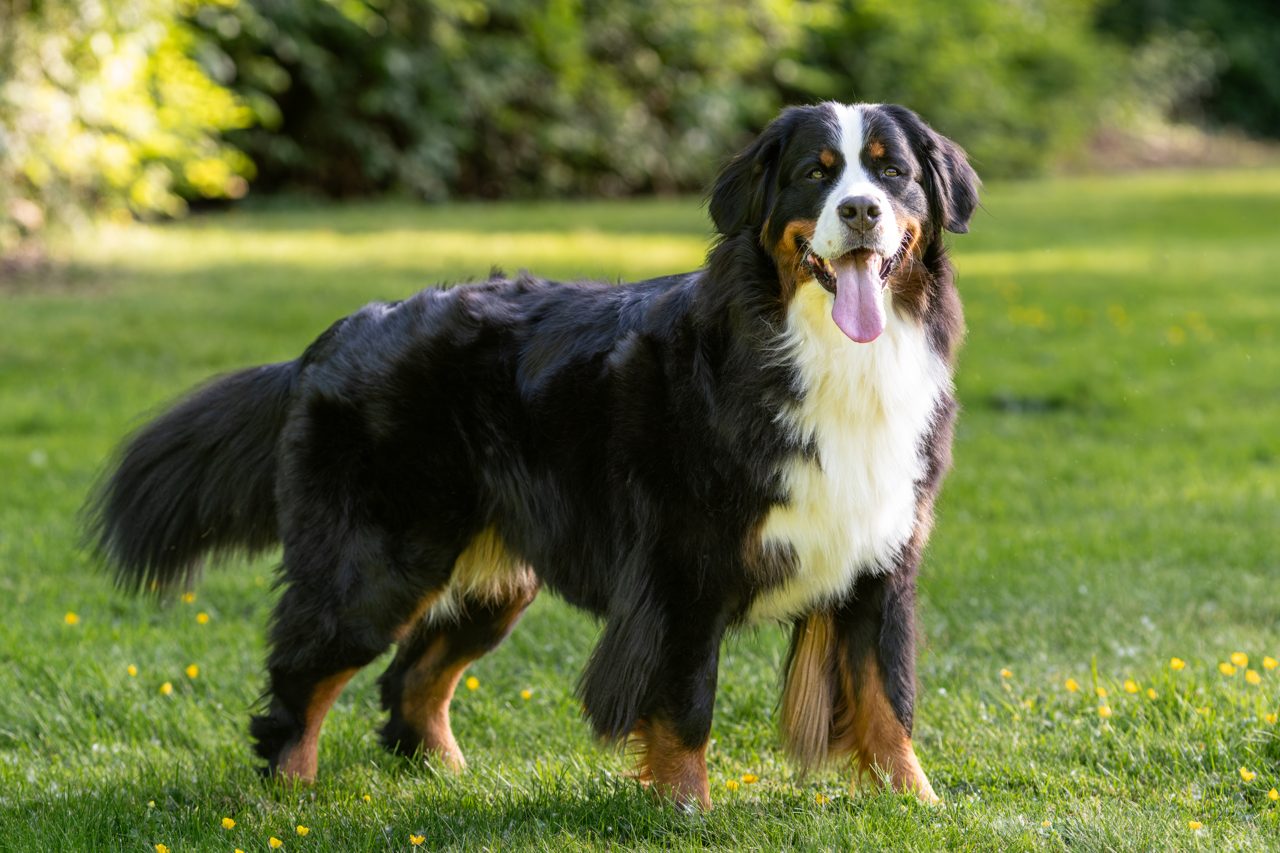
Bernese Mountain Dog

The Bernese Mountain Dog is built for the Swiss Alps. Strong, steady, and deeply loyal, the Berner was originally a working farm dog, pulling carts and

What the atlas says about Bernese Mountain Dog

In the atlas, the Bernese Mountain Dog clusters consistently as Bernese Mountain Dog (100% of the 532 dogs here). At the trait loci, LCORL runs lower than average (38% here vs 83%); FGF4_retrogene_CFA18 runs lower than average (37% here vs 77%).

Ranks 19 of 107 on the bottleneck severity scale, well into the upper quartile of population contraction.

Closest genetic neighbors in the atlas: Saint Bernard, Leonberger, Rottweiler, Flat Coated Retriever, and Labrador Or Golden Retriever.

Median lifespan is 9.05 years, about 2.3 years shorter than a typical dog of 42.5 kg, one of the larger gaps in the atlas.

Genetic dimensions · CanVAS atlas

What the genome says about Bernese Mountain Dog

Computed from the 14,478 research dogs in the Atlas. Methods: technical methodology.

Dogs in the Atlas
532Founders
485 from Hedan, 23 from Hayward2016, 11 from Shannon
Genetic diversity
0.26Tight
Mean heterozygosity across the breed. Ranks 19th most genetically tight of 107 ranked breeds.
Cluster structure
Splits into two genetic sub-populations
Intra-breed RMS distance: 27.55 · likely working/show-line, regional, or kennel lineage split.
Nearest genetic relatives
  1. Saint Bernard6.55
  2. Leonberger7.54
  3. Rottweiler7.99
  4. Flat Coated Retriever8.06
  5. Labrador Or Golden Retriever8.72
Top-10 PC corrected Euclidean. Lower = closer.
Trait genetics
Allele frequencies at named morphology loci

Frequency of the alternate allele in this breed at each locus's representative SNP. Methods + caveats in technical methodology.

Body size
IGF141%
HMGA296%
SMAD299%
LCORL38%
STC295%
ADAMTS1793%
Leg length
FGF4·CFA1837%
FGF4·CFA1256%
Coat
RSPO277%
FGF574%
KRT71100%
MC1R100%
Ear set
MSRB393%
Skull shape
BMP399%
SMOC290%

Bernese Mountain Dog Dog Food: What Owners Need to Know

The Bernese Mountain Dog is built for the Swiss Alps. Strong, steady, and deeply loyal, the Berner was originally a working farm dog, pulling carts and keeping watch in some of the most beautiful and demanding terrain in Europe. That heritage gave them their calm temperament, their powerful build, and a constitution that responds remarkably well to the right nutrition.

Here is the good news that most breed guides skip: the primary health challenges facing Bernese Mountain Dogs are among the most nutritionally responsive of any large breed. Their joints, their heart, and their long-term comfort are all areas where what goes in the bowl has a real, measurable impact. Owners who understand the breed’s specific needs have a genuine advantage.

This guide gives you that advantage. Every recommendation is backed by published data, and every citation is linked so you can verify it yourself.

Last Verified: May 25, 2026 · 10 minute read · Methodology


TL;DR

Bernese Mountain Dog owners who get the nutrition right, especially during puppyhood, give their dog a real edge on long-term joint health and comfort.

The OFA database shows that 26.5% of Berners have elbow dysplasia and 16.1% have hip dysplasia OFA, OFA. Those numbers sound high, and they are. But developmental orthopedic conditions are among the most diet-responsive health issues in veterinary medicine. Controlled calcium levels, a precise mineral ratio during growth, and lifelong weight management are proven tools for reducing severity and improving outcomes.

Sniff recommends a large-breed puppy formula with controlled calcium (1.0 to 1.5% on a dry matter basis) and a calcium-to-phosphorus ratio between 1.1:1 and 1.8:1 NRC, 2006. For adults and seniors, the focus shifts to maintaining a lean body condition on a high-protein diet that supports their muscular frame without adding unnecessary weight. Read our full methodology for how we evaluate foods for these needs.


What makes feeding a Bernese Mountain Dog different

The Berner is a giant breed with a moderate energy level, a combination that requires a thoughtful approach to nutrition. They were developed as versatile working dogs in the Swiss canton of Bern, capable of pulling heavy loads, herding cattle, and standing guard AKC. That history built a dog with serious muscle mass, a large skeletal frame, and a calm disposition that can tip toward weight gain if portions aren’t managed.

In the knowledge graph, Bernese Mountain Dogs cluster with other giant working breeds like the Saint Bernard (94% similarity), Great Pyrenees (93%), and Great Dane (92%). They share similar nutritional profiles: high protein needs to maintain their frame, careful mineral management during growth, and a lifelong emphasis on lean body condition.

A generic “large breed” food often falls short for a Berner. Their needs are closer to the giant breed category, where the margin for error on mineral balance during growth is smaller and the consequences of excess weight on joints are more pronounced.

The health profile: what you can actually influence

Joints: where nutrition makes the biggest difference

The Berner’s most well-documented health challenge is orthopedic, and this is also where diet has the most direct impact. The OFA reports a 26.5% prevalence of elbow dysplasia based on tens of thousands of evaluations, placing them 13th among all breeds for this condition OFA. Hip dysplasia affects 16.1% of evaluated dogs OFA. Additionally, 4.0% show evidence of shoulder Osteochondritis Dissecans (OCD), a developmental condition where cartilage doesn’t properly mature into bone OFA.

These conditions have a genetic component, but their severity is directly influenced by two things owners control: growth rate during puppyhood and body weight throughout life. Research consistently shows that controlled mineral intake during development and lean body maintenance in adulthood produce better outcomes in breeds predisposed to joint disease. This is one of the areas where informed feeding makes the most tangible difference.

Heart health: a reason for thoughtful food choices

The FDA received 13 reports of diet-associated dilated cardiomyopathy (DCM) involving Bernese Mountain Dogs out of 1,382 total canine cases between 2014 and 2022 FDA, 2022. This places Berners among breeds with a notable number of reports.

The science on diet-associated DCM is still evolving, and a report does not prove causation. But the signal is worth paying attention to, and it informs our recommendation to favor well-researched, grain-inclusive formulations for the breed. For a thorough look at what the research says and where the gaps are, see our guide on grain-free diets and DCM.

Genetic conditions worth knowing about

Responsible breeders screen for several inherited conditions. OFA data shows that 4.2% of Berners are genetically at risk for Degenerative Myelopathy (a progressive spinal cord condition), and 38.3% carry the gene OFA. Additionally, 11.1% are carriers for von Willebrand’s Disease, a blood clotting disorder OFA. These are managed through genetic testing and selective breeding rather than diet, but they underscore the value of choosing a well-tested puppy from a health-conscious breeder.

Puppy years: building the strongest possible foundation

The first 18 months of a Berner’s life are a window of opportunity. Their skeleton is developing rapidly, and the minerals that fuel that development need to arrive in the right amounts and the right proportions. Getting this right gives your puppy the best chance at strong, well-formed joints for life.

The most important lever is calcium. The National Research Council recommends that diets for growing large-breed puppies contain between 1.0% and 1.5% calcium on a dry matter basis, with a calcium-to-phosphorus ratio between 1.1:1 and 1.8:1 NRC, 2006. Too much calcium accelerates bone growth beyond what the surrounding cartilage and soft tissue can support. Too little leaves the skeleton without the raw materials it needs. The sweet spot produces steady, well-paced development.

This is why Sniff recommends a food specifically formulated for large or giant breed puppies. These formulas are engineered with the mineral precision that a growing Berner requires. “All life stages” foods are formulated for the most demanding nutritional scenario (growth and lactation), which often means calcium levels that are higher than ideal for a giant breed puppy, unless the food explicitly states it meets AAFCO standards for the growth of large-size dogs.

Practical guidance: feed measured meals two to three times daily rather than free-feeding. You should be able to feel your puppy’s ribs easily under a thin layer of covering, but not see them prominently. A lean, athletic puppy is building a better frame than a chunky one.

Adult years: keeping the engine running clean

Once your Berner reaches skeletal maturity around 18 to 24 months, the nutritional focus shifts from building the frame to protecting it. The single most effective tool at this stage is maintaining a lean body condition.

An average 95-pound Bernese Mountain Dog has a resting energy requirement of approximately 1,230 calories per day NRC, 2006. Your individual dog’s needs will vary based on their metabolism, activity level, and whether they’ve been spayed or neutered. The feeding chart on the bag is a starting point, not a prescription. Feed the dog in front of you.

A high-quality adult food built on named animal proteins like chicken meal or lamb meal provides the amino acids their muscles need. Including a source of omega-3 fatty acids, ideally from fish oil or a marine ingredient, supports joint comfort and overall inflammatory balance. These are small, practical choices that add up over years of daily feeding.

Senior years: strength through smart nutrition

Bernese Mountain Dogs typically enter their senior phase around age 7. This is a natural transition, and the right nutritional adjustments can help them stay strong, comfortable, and active through it.

The most important thing to know about feeding a senior Berner is that they need more high-quality protein, not less. The old idea that older dogs should eat less protein is outdated and counterproductive. As dogs age, they naturally lose lean muscle mass in a process called sarcopenia. Higher-quality, more digestible protein helps them maintain the muscle that supports their joints and keeps them moving well.

Look for a senior food with a protein content of at least 25% on a dry matter basis from named animal sources. You may need to reduce total calories slightly if their activity level decreases, but that reduction should come from fat and carbohydrates, not protein. Strong muscles on a lean frame is the formula for a comfortable senior Berner.

What Sniff recommends and why

Our recommendations for Bernese Mountain Dogs are built around three principles, each one grounded in the breed’s documented health profile.

Start with a large-breed puppy formula. Controlled calcium (1.0 to 1.5% DM) and a precise calcium-to-phosphorus ratio are the foundation. This is the single highest-impact nutritional decision you’ll make for your Berner.

Favor well-researched, grain-inclusive formulations. Given the 13 DCM cases reported in the breed, we recommend foods from companies that invest in research, employ veterinary nutritionists, and conduct AAFCO feeding trials. We approach diets heavy in pulse ingredients like peas and lentils with caution for this breed.

Maintain a lean body condition for life. Choose a high-quality food with strong animal protein sources, feed measured portions, and adjust based on your dog’s individual body condition rather than a generic chart. For seniors, prioritize protein to preserve muscle.

For our ranked list of foods that meet these criteria, see our guide to the best dog food for Bernese Mountain Dogs.

What we don’t know

The relationship between nutrition and orthopedic outcomes is well established in broad terms, but we can’t yet quantify the exact percentage of risk reduction from an optimized diet versus a generic one. Genetics play a major role, and the interplay between genetic predisposition and nutritional environment is still being studied.

The mechanism behind diet-associated DCM remains an active area of research. We don’t know why certain breeds, including Berners, appear in the FDA reports at higher rates, or which specific dietary factors may be involved.

Bernese Mountain Dogs also have elevated rates of certain cancers, particularly histiocytic sarcoma. There are currently no evidence-based dietary strategies specifically proven to prevent cancer in the breed. This is an area where the research has significant room to grow, and we’re watching it closely.

Frequently asked questions

What is the best dog food brand for a Bernese Mountain Dog? No single brand is best for every dog. We recommend foods from companies that conduct feeding trials and employ veterinary nutritionists. Our ranked list at best dog food for Bernese Mountain Dogs shows specific products that meet our criteria.

Is a grain-free diet safe for my Bernese Mountain Dog? We recommend caution. With 13 DCM cases reported in the breed, grain-inclusive formulations from well-researched manufacturers are the safer choice until the science is more definitive. Our DCM guide covers the full picture.

When should I switch my Berner to a senior food? Around age 7. Look for a formula that maintains or increases protein quality to support muscle preservation. Avoid traditional low-protein “senior” diets, which can accelerate muscle loss. Our methodology explains how we evaluate life-stage formulations.

Is a raw diet good for a Bernese Mountain Dog? We don’t recommend it, especially for puppies. Achieving the precise mineral balance a growing giant breed requires is extremely difficult with a raw formulation, and the consequences of getting it wrong are significant. Our guide on how to read a dog food label can help you evaluate commercial options instead.

What ingredients should I avoid? For puppies, avoid foods with uncontrolled calcium levels. For all life stages, be cautious of unnamed ingredients like “meat and bone meal” and artificial preservatives like BHA. Our controversial ingredients guide covers all 25 ingredients on our watchlist.

How often should I feed my Bernese Mountain Dog? Twice a day is ideal for adults. This helps manage hunger, supports steady energy levels, and can reduce the risk of bloat, a serious concern for deep-chested giant breeds like the Berner and the Great Dane.

Does my Bernese Mountain Dog need supplements? Not if they’re eating a complete and balanced diet. If you’re concerned about joint support, talk to your vet about whether a supplement with glucosamine or fish oil would be appropriate for your individual dog.


The bigger picture

The Bernese Mountain Dog is one of the most gentle, devoted breeds you can bring into your life. Their calm presence, their patience with children, and their quiet loyalty to their family make them something truly special.

Feeding a Berner well is one of the most straightforward ways to honor what they give you. The research is clear on what helps: the right minerals during growth, a lean body condition in adulthood, strong protein in their senior years. You don’t need a veterinary degree to get this right. You just need the information, and now you have it.

Every good meal you put in their bowl is compounding. It’s supporting joints that will carry them on walks for years. It’s fueling the muscles that keep them comfortable and mobile. It’s a quiet, daily investment in the dog who chose to be your companion.

You know what your Berner needs. Trust that.


Last Verified: May 25, 2026. This page is informational and does not constitute veterinary advice. If your Bernese Mountain Dog has a health condition, consult a veterinarian, ideally one who is board-certified in internal medicine (DACVIM) or nutrition (DACVIM-Nutrition). Read our full methodology and our the Pledge.

Add your Bernese Mountain Dog to the Atlas

You can add your Bernese Mountain Dog right now at /add/ as a Charted star. Or, if you'd rather wait for DNA uploads, leave your email and we'll let you know the moment those open.

Last updated
Sources: CanVAS (Brundage 2026) · CanVAS dimensions data