snıff

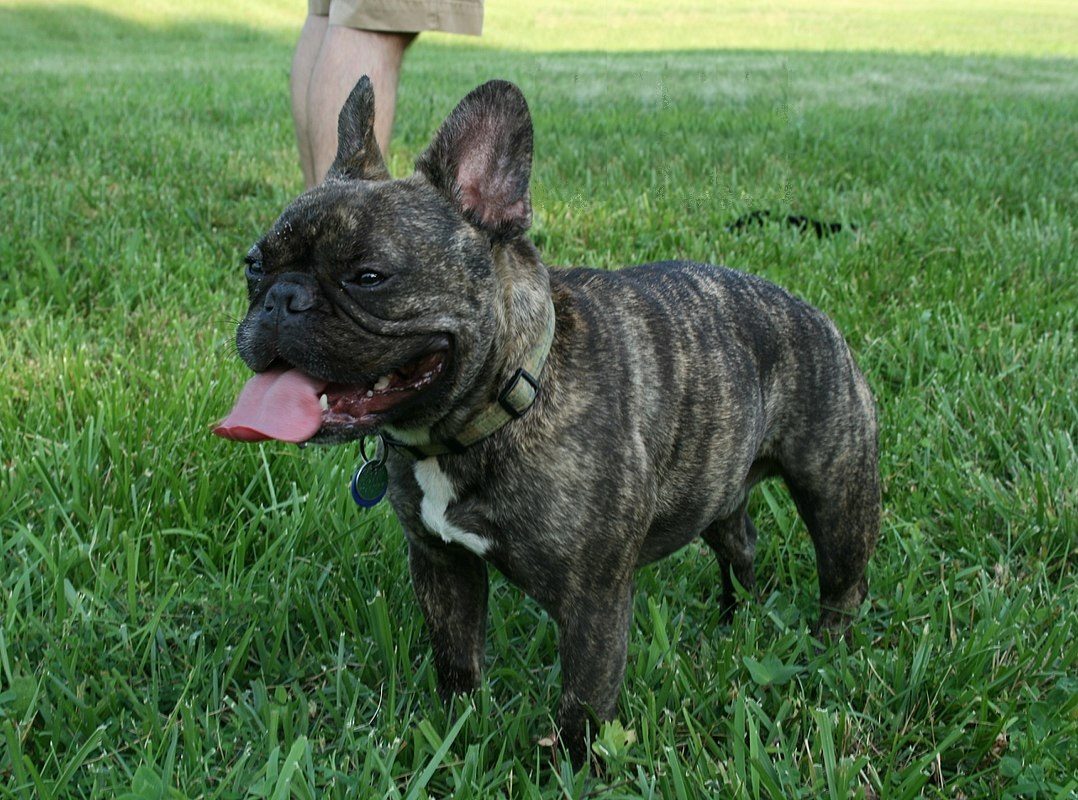
French Bulldog

The French Bulldog is one of the world's most popular companions, and for good reason. With their expressive faces, playful nature, and deep loyalty, they

What the atlas says about French Bulldog

In the atlas, the French Bulldog clusters consistently as French Bulldog (100% of the 41 dogs here). At the trait loci, FGF4_retrogene_CFA12 runs lower than average (21% here vs 80%); IGF1 runs higher than the atlas average (94% here vs 55%). Dogs here sit in a relatively sparse region of the atlas, fewer close neighbors than typical.

Closest genetic neighbors in the atlas: Boston Terrier, Staffordshire Bull Terrier, Dogue De Bordeaux, Mastiff, and Cane Corso.

Median lifespan is 10.0 years, about 2.5 years shorter than a typical dog of 11.0 kg, one of the larger gaps in the atlas.

Genetic dimensions · CanVAS atlas

What the genome says about French Bulldog

Computed from the 14,478 research dogs in the Atlas. Methods: technical methodology.

Dogs in the Atlas
41Founders
27 from Hayward2016, 10 from Spatola, 4 from JenkinsWGS
Genetic diversity
0.32Moderate
Mean heterozygosity across the breed. Ranks 64th most genetically tight of 107 ranked breeds.
Cluster structure
Splits into two genetic sub-populations
Intra-breed RMS distance: 22.66 · likely working/show-line, regional, or kennel lineage split.
Nearest genetic relatives
  1. Boston Terrier4.58
  2. Staffordshire Bull Terrier8.22
  3. Dogue De Bordeaux11.62
  4. Mastiff11.89
  5. Cane Corso15.33
Top-10 PC corrected Euclidean. Lower = closer.
Trait genetics
Allele frequencies at named morphology loci

Frequency of the alternate allele in this breed at each locus's representative SNP. Methods + caveats in technical methodology.

Body size
IGF194%
HMGA232%
SMAD250%
LCORL100%
STC288%
ADAMTS1780%
Leg length
FGF4·CFA18100%
FGF4·CFA1221%
Coat
RSPO254%
FGF537%
KRT71100%
MC1R94%
Ear set
MSRB3100%
Skull shape
BMP389%
SMOC273%

French Bulldog Dog Food: What Owners Need to Know

The French Bulldog is one of the world’s most popular companions, and for good reason. With their expressive faces, playful nature, and deep loyalty, they bring a unique brand of joy into any home. That charming, compact build is their signature, and it responds incredibly well to the right nutrition.

Here is the good news that most breed guides skip: the primary health challenges facing French Bulldogs are among the most nutritionally responsive of any breed. Their joints, their breathing, and their long-term comfort are all areas where what goes in the bowl has a real, measurable impact. Owners who understand the breed’s specific needs have a genuine advantage.

This guide gives you that advantage. Every recommendation is backed by published data, and every citation is linked so you can verify it yourself.

Last Verified: May 25, 2026 · 11 minute read · Methodology


TL;DR

Maintaining a lean body condition is the single most powerful tool you have to support your French Bulldog’s long-term health and comfort.

The Orthopedic Foundation for Animals (OFA) reports that 31.4% of French Bulldogs have hip dysplasia based on 1,849 evaluations OFA. That number sounds high, and it is. But it also points directly to the power of weight management. Every extra ounce of body weight adds stress to their joints. A landmark study also found that for every point a dog gains on a 9-point Body Condition Score scale, their odds of suffering from Brachycephalic Obstructive Airway Syndrome (BOAS) double.

This is why Sniff recommends a precisely portioned, calorie-controlled diet to keep your Frenchie lean. Foods with high-quality protein and moderate fat levels support their muscular frame without adding unnecessary weight. For this breed, managing weight is the foundation for a healthy, comfortable life.


What makes feeding a French Bulldog different

A French Bulldog is a small companion breed, but their nutritional needs are unique. They were bred for companionship in cities like Paris, not for high-energy work. As a result, their caloric needs are surprisingly low, and their dense, muscular frame on short legs makes them prone to weight gain if overfed.

This build, combined with a typically lower activity level, means that portion control is essential. Unlike a more active breed that might burn off extra calories, a Frenchie stores them. Understanding this unique metabolism is the key to feeding them well. It’s not about restriction, it’s about precision. A few extra treats or a slightly-too-large scoop of kibble can add up, so a thoughtful approach to calories is the best way to support their structure. The American Kennel Club breed standard suggests a weight under 28 pounds AKC.

The health profile: what you can actually influence

The French Bulldog’s health profile is closely tied to their unique physical structure. While diet is not a cure for genetic predispositions, it is one of the most powerful tools an owner has to manage them effectively.

Joints and Structure: Where Lean Body Condition is Key

The data on French Bulldog skeletal health gives us a clear roadmap. The OFA reports a 31.4% rate of hip dysplasia, a 4.1% prevalence of patellar luxation (dislocating kneecaps), and a 2.4% rate of elbow dysplasia OFA, OFA. Furthermore, a radiographic study of 100 asymptomatic French Bulldogs found that 99% had at least one vertebral malformation, with an average of 6.7 per dog.

This data highlights why a lean body condition is so important. For a French Bulldog, keeping them at a healthy weight is the most effective way to reduce daily stress on a frame that is already working hard. It’s a simple, powerful lever for promoting lifelong comfort and mobility.

Breathing and Weight: A Direct Connection

Many French Bulldogs are affected by Brachycephalic Obstructive Airway Syndrome (BOAS), with one study finding that 50% of them had clinically relevant signs. This condition is directly impacted by body weight.

Fat deposits in the neck and chest can narrow an already compact airway. The link is quantifiable: for every unit increase in Body Condition Score, the odds of a brachycephalic dog having BOAS doubles. Keeping your French Bulldog lean is one of the most direct ways to support their respiratory comfort.

Skin and Stomach Sensitivities

French Bulldogs are known for having sensitivities, both in their skin and their digestive systems. While many factors can be involved, diet is often a key piece of the puzzle. For dogs with suspected food allergies, the diagnostic gold standard is a strict elimination diet using a novel or hydrolyzed protein source, conducted under veterinary supervision. Many owners find that limited-ingredient diets, which contain fewer potential triggers, are a helpful tool for managing these sensitivities.

A Note on Diet-Associated DCM

The FDA’s investigation into diet-associated dilated cardiomyopathy (DCM) identified French Bulldogs as one of the top 10 most-reported breeds, with 13 affected dogs in the agency’s 2022 update FDA, 2022. A report does not prove causation. However, this signal informs our precautionary stance. We recommend favoring well-researched, grain-inclusive formulations and approaching diets with high concentrations of pulse ingredients like peas or lentils with caution for this breed. You can read our full guide on this complex topic at [/guide/grain-free-dog-food-and-dcm/].

Puppy years: building the strongest possible foundation

The puppy stage is a window of opportunity for a French Bulldog’s long-term skeletal health. The goal is steady, controlled growth that allows their bones and joints to develop properly.

For a breed with a 31.4% rate of hip dysplasia, controlled mineral intake is essential. Too much calcium can accelerate growth in a way that cartilage and soft tissues can’t support. Look for a puppy food specifically formulated for small breeds, which will have a controlled calcium level and a calcium-to-phosphorus ratio between 1.1:1 and 1.5:1. We recommend avoiding “all life stages” formulas unless they explicitly state they meet AAFCO standards for the growth of small-breed dogs, as they can be too calorie-dense or have inappropriate mineral levels.

Measuring each meal is a simple habit that prevents the rapid weight gain that puts stress on developing joints. This sets your puppy up for a lifetime of good health.

Adult years

For an adult French Bulldog, nutrition is about protecting the foundation you built in puppyhood. The primary goal is to maintain a lean body condition, which means a Body Condition Score of 4 or 5 on a 9-point scale. You should be able to easily feel their ribs with a light touch, and they should have a visible waist when viewed from above.

The AKC’s 28-pound weight standard is a helpful guidepost AKC. Because their caloric needs are low, portion control is everything. Use the feeding guidelines on the bag as a starting point, but always adjust based on your dog’s actual body condition.

A diet with high-quality protein from sources like chicken meal or turkey meal will help maintain muscle mass without adding excess calories. Ingredients that support joint health, like the omega-3 fatty acids EPA and DHA found in fish oil, are a sensible addition for a breed with a high prevalence of orthopedic disease.

Senior years: strength through smart nutrition

As French Bulldogs enter their senior years, typically around age 7 or 8, their nutritional needs shift. It’s a common myth that senior dogs need low-protein diets. In fact, the opposite is true.

Older dogs experience sarcopenia, the age-related loss of muscle mass. To support them, they need more high-quality, highly digestible protein than their younger counterparts. The NRC recommends a protein floor of 2.5 g per kg of body weight for healthy senior dogs. Strong muscles are the best support system for aging joints, which is especially critical for a Frenchie.

Continue to manage their calorie intake, as their metabolism may slow. A food with high-quality protein, moderate fat, and adequate fiber can help them feel full while maintaining muscle and a healthy weight well into their golden years.

What Sniff recommends and why

Our recommendations for French Bulldogs are built around a central principle: using nutrition to support their unique structure and metabolism.

We recommend a calorie-controlled, limited-ingredient diet that is grain-inclusive. The calorie density should be moderate, typically under 400 kcal/cup, to make weight management easier. The protein should be high-quality and from a clearly named animal source, and fat levels should be moderate. We also prioritize foods that include sources of omega-3s like fish oil to support joint health.

Specifically, we advise a cautious approach to grain-free formulas that rely heavily on pulse ingredients like peas, lentils, and other legume seeds. The FDA’s data on diet-associated DCM shows a signal in French Bulldogs that we believe warrants this precautionary stance FDA, 2022.

For our ranked list of foods that meet these criteria, see our guide to the best dog food for French Bulldogs.

What we don’t know

While research on French Bulldogs is growing, significant gaps remain. We know that maintaining a lean body condition is crucial for managing orthopedic and respiratory risks, but we lack specific, quantitative data on how different dietary interventions might prevent these conditions from developing in the first place.

For example, we don’t have a study that says, “Feeding a diet with X% omega-3s reduces the incidence of hip dysplasia in French Bulldogs by Y%.” We operate on established nutritional principles, like the role of omega-3s in supporting joint health, but breed-specific preventative studies are an area for future research.

Similarly, the exact mechanism behind the diet-associated DCM cases reported in the breed is still unknown. The correlation exists, but the causation has not been established, leaving owners and veterinarians to make decisions based on the available evidence.

Frequently asked questions

What is the best brand of dog food for a French Bulldog? No single brand is best for every dog. We recommend focusing on a food that is calorie-controlled, has high-quality protein, moderate fat, and is made by a company that invests in research. For a list of foods that fit our criteria, see our guide to the best dog food for French Bulldogs.

Is grain-free dog food safe for French Bulldogs? We recommend caution. French Bulldogs were one of the most-reported breeds in the FDA’s diet-associated DCM investigation. As a precaution, we suggest choosing grain-inclusive diets or those without high concentrations of peas and lentils until the science is more definitive. Read our full analysis in the DCM guide.

When should I switch my French Bulldog to a senior food? A good time to consider a switch is between ages 7 and 8. The most important change is to a food with higher protein to combat muscle loss, not lower. Base the decision on your individual dog’s health and body condition. Our methodology explains how we evaluate life-stage formulas.

Can I feed my French Bulldog a raw diet? We don’t recommend it. French Bulldogs are often prone to sensitive stomachs, and raw diets carry a higher risk of bacterial contamination from pathogens like Salmonella and E. coli, which can cause severe GI upset. You can learn more about the risks of raw ingredients like chicken.

What ingredients should I avoid in a French Bulldog’s food? Avoid anonymous meat ingredients like “meat meal,” artificial preservatives like BHA, and artificial colors. For a breed prone to sensitivities, a shorter ingredient list with clearly named sources is a great place to start. See our guide to controversial ingredients for a full list.

How often should I feed my French Bulldog? Twice a day is ideal. Free-feeding encourages overeating and makes it difficult to monitor intake, which is essential for a breed prone to obesity. Use the feeding chart on the bag as a starting point, and learn how to read a dog food label to adjust portions for your dog’s specific needs.

Do French Bulldogs need joint supplements? A complete and balanced diet is the first step. A food containing joint-supportive ingredients like fish oil is a great foundation. If your veterinarian diagnoses arthritis, they may recommend additional supplements.


The bigger picture

The French Bulldog brings a unique kind of joy and companionship into a home. Their charm is undeniable, and their loyalty is absolute. They give a lot, and feeding them well is a direct way to honor that.

The science is clear on what helps them thrive: a lean body condition supported by precise, calorie-controlled nutrition. You don’t need a veterinary degree to get this right. You just need the information, and now you have it.

Every meal you measure is a daily investment in their comfort and mobility. It’s a quiet, powerful way to support the body that houses that big personality. It’s one of the most effective tools you have to give them a long, happy, comfortable life.

You know what your Frenchie needs. Trust that.


Last Verified: May 25, 2026. This page is informational and does not constitute veterinary advice. If your French Bulldog has a health condition, consult a veterinarian, ideally one who is board-certified in internal medicine (DACVIM) or nutrition (DACVIM-Nutrition). Read our full methodology and our the Pledge.

Add your French Bulldog to the Atlas

You can add your French Bulldog right now at /add/ as a Charted star. Or, if you'd rather wait for DNA uploads, leave your email and we'll let you know the moment those open.

Last updated
Sources: CanVAS (Brundage 2026) · CanVAS dimensions data