snıff

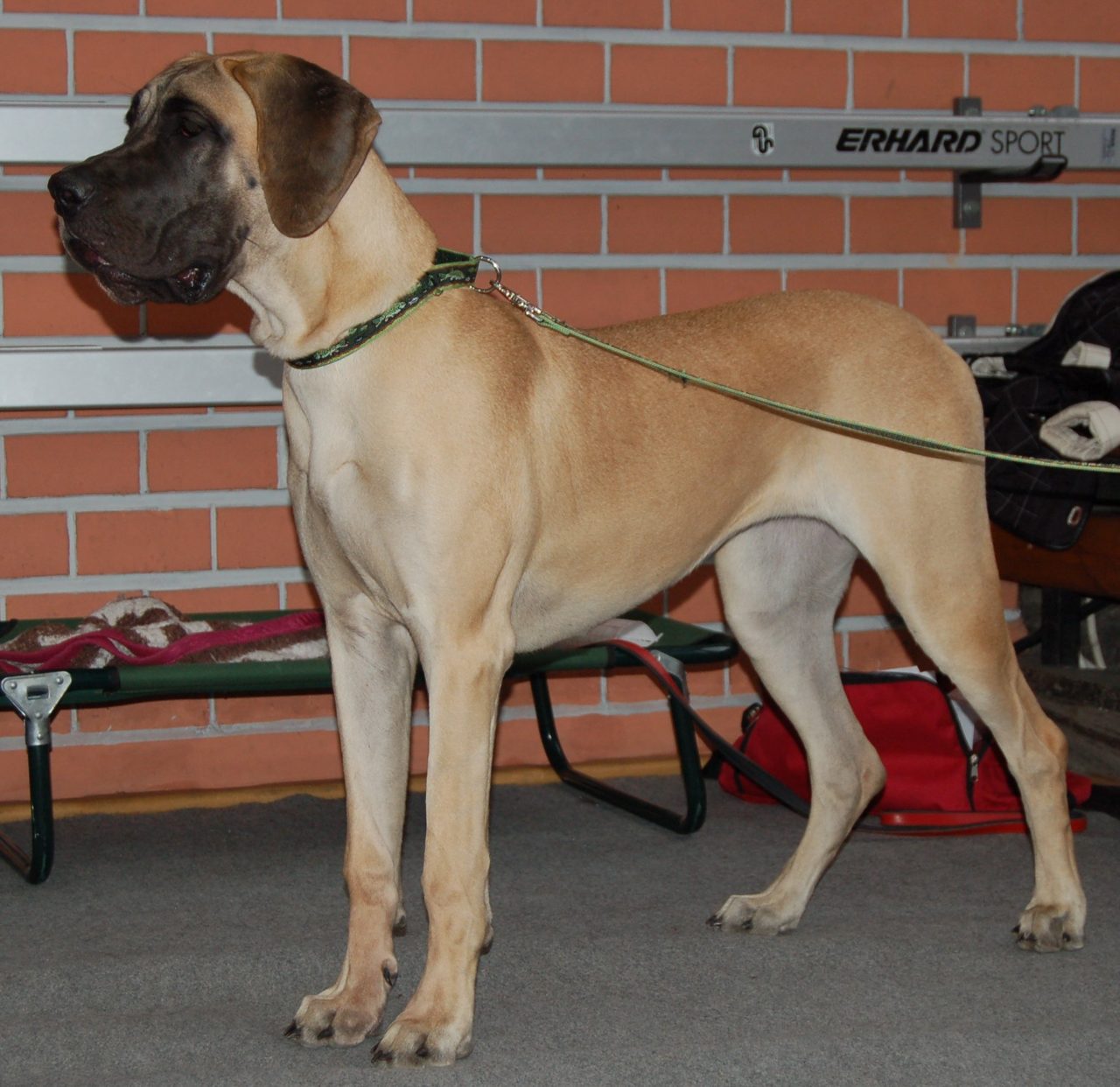
Great Dane

Known as the "Apollo of Dogs," the Great Dane is a breed of majestic presence and gentle spirit. Their combination of power and grace is unmatched in the

What the atlas says about Great Dane

In the atlas, the Great Dane clusters consistently as Great Dane (100% of the 30 dogs here). At the trait loci, LCORL runs lower than average (0% here vs 83%); ADAMTS17 runs lower than average (20% here vs 54%). Dogs here sit in a relatively sparse region of the atlas, fewer close neighbors than typical.

Closest genetic neighbors in the atlas: Whippet, Leonberger, Rottweiler, mixed breed, and Newfoundland.

Genetic dimensions · CanVAS atlas

What the genome says about Great Dane

Computed from the 14,478 research dogs in the Atlas. Methods: technical methodology.

Dogs in the Atlas
30Founders
19 from Hayward2016, 10 from Spatola, 1 from JenkinsWGS
Genetic diversity
0.31Moderate
Mean heterozygosity across the breed. Ranks 56th most genetically tight of 107 ranked breeds.
Cluster structure
Splits into two genetic sub-populations
Intra-breed RMS distance: 27.01 · likely working/show-line, regional, or kennel lineage split.
Nearest genetic relatives
  1. Whippet8.54
  2. Leonberger8.69
  3. Rottweiler8.76
  4. Mix8.82
  5. Newfoundland9.11
Top-10 PC corrected Euclidean. Lower = closer.
Trait genetics
Allele frequencies at named morphology loci

Frequency of the alternate allele in this breed at each locus's representative SNP. Methods + caveats in technical methodology.

Body size
IGF160%
HMGA272%
SMAD292%
LCORL0%
STC256%
ADAMTS1720%
Leg length
FGF4·CFA18100%
FGF4·CFA1282%
Coat
RSPO270%
FGF575%
KRT7187%
MC1R43%
Ear set
MSRB395%
Skull shape
BMP386%
SMOC295%

Great Dane Dog Food: What Owners Need to Know

Known as the “Apollo of Dogs,” the Great Dane is a breed of majestic presence and gentle spirit. Their combination of power and grace is unmatched in the canine world. That giant frame, a product of their heritage as noble hunters, gives them their unique character and also presents a set of well-understood nutritional needs that owners are uniquely equipped to manage.

Here is the good news that most breed guides skip: the primary health challenges facing Great Danes are among the most researched and nutritionally responsive of any breed. Their skeletal development, joint health, and even acute risks like bloat are all areas where what goes in the bowl has a real, measurable impact. Owners who understand the breed’s specific needs have a genuine advantage.

This guide gives you that advantage. Every recommendation is backed by published data, and every citation is linked so you can verify it yourself.

Last Verified: May 25, 2026 · 11 minute read · Methodology


TL;DR

For Great Dane owners, managing the rate of a puppy’s growth is the single most powerful tool for building a lifetime of good health.

A Great Dane’s rapid growth puts them at a higher risk for joint and bone problems. The key is to support slow, steady development. A study of Great Dane puppies found that a diet high in calcium (3.3% on a dry matter basis) caused abnormal skeletal development compared to puppies fed a diet with appropriate calcium levels (1.1% DMB). This shows just how responsive their bodies are to the right nutrition.

Sniff’s position is that Great Dane puppies thrive on a diet specifically formulated for large- or giant-breed puppies. These foods are engineered with controlled calcium levels, a precise calcium-to-phosphorus ratio, and the right calorie density to build a strong foundation. For adults, we recommend a high-quality, grain-inclusive diet, a thoughtful choice given the breed’s health profile. Read our full guide on diet-associated DCM for more on this topic.


What makes feeding a Great Dane different

The Great Dane is a gentle giant whose nutritional needs are defined by their impressive size. As members of the Working Group, they were originally bred to hunt wild boar, but today’s Dane is a moderately active companion whose diet is built to support their massive frame AKC.

Weighing between 110 and 175 pounds, a Great Dane’s body is an engineering marvel. Their nutritional requirements are distinct from other large breeds. A generic “adult dog food” doesn’t account for the specific mineral and energy balance required to build and maintain such a large structure safely.

Feeding a Great Dane is like being the steward of a historic landmark. It requires attention, specific materials, and an understanding of its unique architecture to keep it strong for generations.

The health profile: what you can actually influence

Gastric Dilatation-Volvulus (GDV or “Bloat”)

Great Danes have the highest documented lifetime risk for GDV of any breed, estimated at 42.4% [Glickman et al. 2000 (gdv)]. This is a serious medical emergency where the stomach fills with gas and twists. While the statistic is concerning, it has led to clear, effective management strategies that give owners a set of tools to reduce the risk. Feeding multiple small meals per day, avoiding raised food bowls, and preventing vigorous exercise around mealtimes are proven tactics.

Joint Health

The breed’s size and growth rate place significant demands on their joints. The Orthopedic Foundation for Animals (OFA) reports a hip dysplasia prevalence of 13.9% based on over 26,000 evaluations OFA. Elbow dysplasia has a prevalence of 7.2% across nearly 15,000 evaluations OFA.

These numbers sound high, but this is an area where owners have tremendous influence. While genetics play a role, the two biggest levers for better joint outcomes are controlling the rate of growth during puppyhood and maintaining a lean body condition throughout the dog’s life.

Heart Health

Great Danes have a known genetic predisposition to dilated cardiomyopathy (DCM), a disease where the heart muscle weakens. A 2010 screening of 105 asymptomatic Great Danes found that 34.3% already had early signs of the condition [Martin et al. 2010 (dcm)], and a specific genetic marker has been identified in some family lines [Stephenson et al. 2012 (dcm)]. This genetic signal is compounded by the fact that 15 Great Danes were named in the FDA’s investigation into diet-associated DCM FDA, 2022. This dual risk doesn’t create confusion, it creates clarity: a cautious, evidence-based approach to diet is the right one for this breed.

Hypothyroidism

Hypothyroidism, where the thyroid gland is underactive, is common in the breed. The OFA database shows that 13.1% of Great Danes tested positive for autoimmune thyroiditis, the condition’s primary cause OFA. This is a manageable condition that requires lifelong medication, and being aware of it helps owners and vets correctly interpret changes in weight or energy levels.

Puppy years: building the strongest possible foundation

The first two years of a Great Dane’s life are a window of opportunity. Their skeleton is growing at a tremendous rate, and providing the right building blocks in the right amounts gives them the best possible start. The goal is not fast growth; it is slow, steady, and controlled growth.

The most important lever is calcium. The National Research Council sets the safe upper limit for dietary calcium at 1.8% on a dry matter basis for large-breed puppies NRC, 2006. A landmark study confirmed that Great Dane puppies fed a diet with 3.3% calcium developed abnormal bones, proving that more is not better.

The ratio of calcium to phosphorus is also essential, and should be maintained between 1.1:1 and 1.8:1 for healthy skeletal development. Finally, the diet’s energy density should be around 3.5 to 4.0 kcal/g, enough for healthy development without encouraging rapid weight gain. This is why we recommend foods specifically labeled “for large breed puppies” or “for giant breed puppies.” It’s also why you should never “top” their food with calcium-rich additions like cottage cheese or yogurt.

Adult years: protecting the frame

Once a Great Dane reaches skeletal maturity around 18-24 months, the nutritional focus shifts from building the frame to protecting it. The primary goals are maintaining a lean body condition and continuing GDV risk management strategies.

A lean Dane is a healthier Dane. Every extra pound puts unnecessary stress on their joints and heart. You should be able to easily feel your Dane’s ribs under a thin layer of covering and see a distinct waistline from above.

To manage GDV risk, the veterinary consensus is to feed multiple smaller meals per day instead of one large one. Feeding two or even three meals breaks up the daily food volume, which reduces the chance of acute stomach distension. Avoiding strenuous activity for an hour or two after eating is another simple, effective precaution.

Senior years: strength through smart nutrition

Great Danes are typically considered seniors by age 6 or 7. The primary nutritional goal for a senior Dane is to combat sarcopenia, the age-related loss of muscle mass, to keep them strong and mobile.

This is where modern nutrition science gives owners a real advantage. The old idea that senior dogs need less protein has been proven incorrect. Senior dogs actually need more high-quality protein than younger adults to maintain the muscle that supports their joints. A generic “senior diet” that is low in protein is precisely the wrong approach for a giant breed.

Look for a diet with high-quality animal protein and adequate calories to maintain a healthy weight and muscle tone. Instead of automatically switching to a food labeled “senior,” evaluate your dog’s individual needs with your veterinarian and choose a diet based on its nutritional merits.

What Sniff recommends and why

For Great Dane puppies, we recommend strict adherence to a diet formulated for giant-breed growth. This is the highest-impact decision an owner can make. This means a food with a dry-matter calcium level between 1.1% and 1.8%, a calcium-to-phosphorus ratio between 1.1:1 and 1.8:1, and a calorie density around 3.5-4.0 kcal/g.

For adult Great Danes, we recommend a high-quality, grain-inclusive diet from a brand that invests in feeding trials and nutritional research. Given the breed’s dual risk for genetic and diet-associated DCM, a precautionary approach is prudent. This means we recommend caution with diets that feature high concentrations of peas, lentils, and other pulse ingredients until more is known.

For our specific, ranked recommendations that meet these criteria, see our list of the best dog foods for Great Danes.

What we don’t know

While the science of Great Dane nutrition is advanced, some questions remain.

The exact mechanism behind diet-associated DCM is still an active area of research. We don’t know precisely why certain diets appear to be a risk factor for some dogs, especially in genetically predisposed breeds like the Great Dane.

The combination of factors that leads to GDV is not fully understood. While we have effective risk-reduction strategies, there is no single nutritional bulletproof vest to prevent it, which is why prophylactic gastropexy surgery is a common conversation for the breed.

Finally, the factors influencing the Great Dane’s shorter-than-average lifespan are complex and not fully understood from a nutritional perspective. There are currently no evidence-based dietary strategies specifically proven to extend lifespan.

Frequently asked questions

What is the best dog food for a Great Dane? No single brand is best for every dog. The best food is one that meets the specific nutritional targets for your Dane’s life stage, especially the strict calcium and calorie limits for puppies. Our methodology explains how to evaluate foods based on these criteria.

Is grain-free dog food safe for Great Danes? We recommend caution. Given the breed’s high genetic predisposition to DCM and their representation in FDA reports, we believe a grain-inclusive diet from a well-researched brand is the safer choice. Learn more in our guide to diet-associated DCM.

When should I switch my Great Dane to a senior food? Switch based on your dog’s condition, not just their age. Many “senior” foods are too low in protein for a giant breed. A better approach is to feed a high-quality adult maintenance diet and consult your vet about when a change might be needed around age 6 or 7.

Can I feed my Great Dane a raw diet? We don’t recommend it for puppies. It is extremely difficult to guarantee the precise calcium-to-phosphorus ratio needed for safe skeletal growth with a raw diet. For adults, it carries risks of bacterial contamination and nutritional imbalance, which is why we consider it a controversial ingredient choice.

What ingredients should I avoid for my Great Dane? For puppies, avoid excess calcium from food or supplements. For all life stages, we recommend being cautious with diets where peas or lentils are primary ingredients due to the unresolved link to DCM.

How often should I feed my Great Dane? At least two meals daily. To help reduce the risk of bloat (GDV), feeding smaller, more frequent meals is recommended. Many owners and breeders opt for two or even three meals per day.

Does my Great Dane need joint supplements? A well-formulated diet is the priority. While some diets include joint-supporting ingredients like fish oil, there is no substitute for a diet that supports lean body mass and controlled puppy growth. Consult your vet before adding any separate supplements.


The bigger picture

To share your life with a Great Dane is a unique privilege. Their gentle nature and quiet companionship leave a mark on everyone they meet. They give their families an incredible amount of love and devotion.

Feeding a Great Dane well is one of the most straightforward ways to honor what they give you. The science is clear on what helps: the right minerals during growth, a lean body condition in adulthood, and strong protein in their senior years. You don’t need a veterinary degree to get this right. You just need the information, and now you have it.

Every good meal you put in their bowl is compounding. It’s building a skeleton that will carry them through life. It’s fueling the muscles that keep them comfortable and mobile. It’s a quiet, daily investment in the gentle giant who chose to be your companion.

You know what your Great Dane needs. Trust that.


Last Verified: May 25, 2026. This page is informational and does not constitute veterinary advice. If your Great Dane has a health condition, consult a veterinarian, ideally one who is board-certified in internal medicine (DACVIM) or nutrition (DACVIM-Nutrition). Read our full methodology and our the Pledge.

Add your Great Dane to the Atlas

You can add your Great Dane right now at /add/ as a Charted star. Or, if you'd rather wait for DNA uploads, leave your email and we'll let you know the moment those open.

Last updated
Sources: CanVAS (Brundage 2026) · CanVAS dimensions data