snıff

Poodle (Standard)

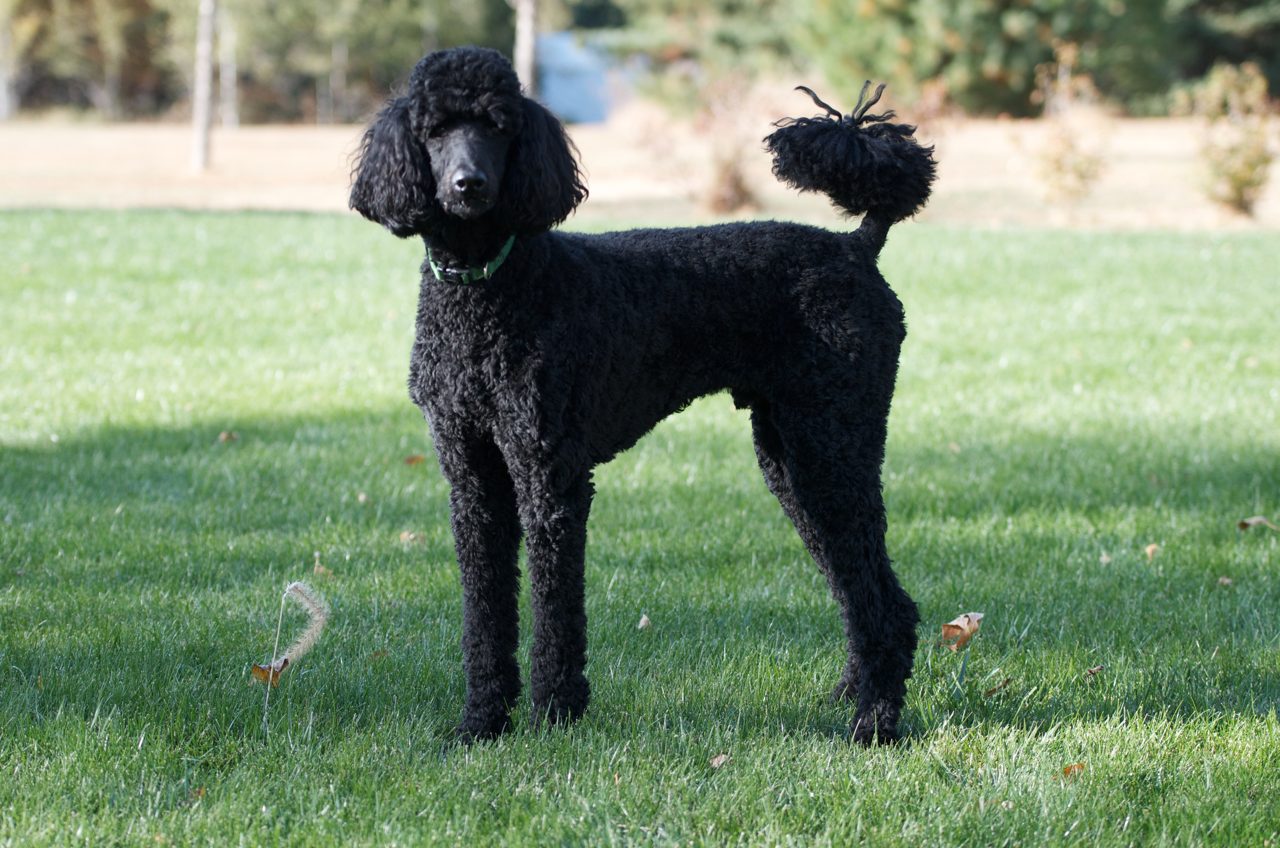
The Standard Poodle is a brilliant combination of elegance and athleticism, a dog with a show-ring presence and a working retriever's heart. Originally

What the atlas says about Poodle (Standard)

In the atlas, the Poodle clusters consistently as Poodle (100% of the 55 dogs here). Genetic diversity is high (mean heterozygosity 0.3312), reflecting either a mixed-breed cluster or breeds with broad genetic backgrounds. At the trait loci, LCORL runs lower than average (36% here vs 83%); RSPO2 runs higher than the atlas average (100% here vs 55%).

Mean heterozygosity is 0.331, notably high, indicates broad genetic background. High breed predictability score (1.31), individual dogs of this breed reliably cluster together genetically.

Closest genetic neighbors in the atlas: Toy Poodle, Minature Poodle, Beagle, Havanese, and Miniature Dachshund.

Median lifespan is 14.0 years, about 2.3 years longer than a typical dog of 26.0 kg, an unusually positive longevity for this size.

Genetic dimensions · CanVAS atlas

What the genome says about Poodle (Standard)

Computed from the 14,478 research dogs in the Atlas. Methods: technical methodology.

Dogs in the Atlas
55Founders
26 from Hayward2016, 24 from Shannon, 5 from Chen
Genetic diversity
0.33Moderate
Mean heterozygosity across the breed. Ranks 78th most genetically tight of 107 ranked breeds.
Cluster structure
Splits into two genetic sub-populations
Intra-breed RMS distance: 27.70 · likely working/show-line, regional, or kennel lineage split.
Nearest genetic relatives
  1. Toy Poodle4.18
  2. Minature Poodle4.30
  3. Beagle6.57
  4. Havanese6.62
  5. Miniature Dachshund6.92
Top-10 PC corrected Euclidean. Lower = closer.
Trait genetics
Allele frequencies at named morphology loci

Frequency of the alternate allele in this breed at each locus's representative SNP. Methods + caveats in technical methodology.

Body size
IGF161%
HMGA248%
SMAD254%
LCORL36%
STC261%
ADAMTS1734%
Leg length
FGF4·CFA1862%
FGF4·CFA1276%
Coat
RSPO2100%
FGF556%
KRT7198%
MC1R83%
Ear set
MSRB380%
Skull shape
BMP396%
SMOC266%

Poodle Dog Food: What Owners Need to Know

The Standard Poodle is a brilliant combination of elegance and athleticism, a dog with a show-ring presence and a working retriever’s heart. Originally bred as capable water dogs in Germany, their intelligence, trainability, and deep connection with their families are legendary. That heritage built a sturdy, athletic frame that responds incredibly well to the right nutrition.

Here is the good news that most breed guides skip: the primary health challenges facing Standard Poodles are areas where owners have a significant advantage. Joint health, skin and coat quality, and long-term vitality are all directly supported by what you put in their bowl every day. An informed owner has the tools to build a truly resilient dog.

This guide gives you those tools. Every recommendation is backed by published data, and every citation is linked so you can verify it yourself.

Last Verified: May 25, 2026 · 11 minute read · Methodology


TL;DR

For Standard Poodle owners, thoughtful nutrition during puppyhood is the most powerful tool for building a lifetime of joint health.

The OFA database shows a 10.2% prevalence of hip dysplasia and a 3.4% prevalence of elbow dysplasia in the breed OFA. While those numbers deserve attention, the good news is that developmental orthopedic conditions are among the most diet-responsive issues in veterinary medicine. Controlled growth, precise mineral ratios in puppyhood, and lifelong lean body condition are proven strategies for better outcomes.

Additionally, Poodles are one of the top 15 breeds reported in the FDA’s investigation into diet-associated dilated cardiomyopathy (DCM) FDA, 2022. This signal informs our recommendation to favor well-researched, grain-inclusive diets from established manufacturers. You can find our specific product recommendations at the best dog food for Poodles.


What makes feeding a Poodle different

Beneath the sophisticated coat, the Standard Poodle is a substantial, athletic dog. Developed as water retrievers in Germany, they are a large breed, with adults typically weighing between 40 and 70 pounds. Their history as working dogs created a muscular build that needs high-quality fuel and consistent exercise to stay lean and strong.

Their nutritional needs are different from those of a smaller companion breed. A generic adult dog food may not provide the specific support a large, active dog’s frame requires. For a Poodle, every meal is an opportunity to support the powerful muscles that stabilize their joints and to fuel the sharp mind they are famous for. Their diet should reflect their history as capable performers.


The health profile: what you can actually influence

The Standard Poodle’s intelligence is well known, and an equally informed owner can make a real difference in managing their health predispositions. Diet is a direct lever for many of them.

Orthopedic Health: A Foundation You Can Build

Joint health is a key area where nutrition has a direct impact. The Orthopedic Foundation for Animals (OFA) database reports a 10.2% prevalence of hip dysplasia across 28,107 evaluations OFA. Elbow dysplasia is also a concern, with a 3.4% prevalence in 16,929 evaluations OFA.

These conditions have a genetic component, but their severity is strongly influenced by factors an owner controls: growth rate during puppyhood and body weight throughout life. Keeping a Poodle at a lean, healthy weight is one of the most effective ways to reduce daily stress on their joints and support long-term mobility.

Heart Health: A Reason for Thoughtful Food Choices

The FDA’s investigation into diet-associated dilated cardiomyopathy (DCM) is relevant for Poodle owners. In the agency’s 2022 update, Poodles were among the 15 most frequently reported breeds, with 13 documented cases FDA, 2022.

A report is not proof of causation, but it is a clear signal that warrants a thoughtful approach. For this reason, Sniff recommends a cautious stance. We advise Poodle owners to favor well-researched, grain-inclusive diets and to be discerning about foods with high concentrations of pulse ingredients like peas and lentils. For a full breakdown of the science, read our guide on grain-free dog food and DCM.

Other Health Considerations

Responsible breeders screen for several conditions, and being aware of them helps you partner with your veterinarian effectively.

Puppy years: building the strongest possible foundation

The first 18 to 24 months of a Standard Poodle’s life are a critical window of opportunity for their long-term skeletal health. Getting this stage right gives your puppy the best possible start.

The goal is slow, steady growth.

A lean, athletic puppy is building a stronger frame than a chubby one. The National Research Council advises that large-breed puppies like Standard Poodles should grow at a controlled pace, not exceeding an average of 100 grams per day for the first five months NRC, 2006.

Calcium levels are the most important lever. A puppy food for a Standard Poodle should contain between 1.0% and 1.5% calcium on a dry matter basis, with a calcium-to-phosphorus ratio close to 1.2:1. This precision is why a food specifically formulated for large-breed puppies is essential. “All life stages” foods are often formulated with higher mineral levels that are not ideal for a growing Poodle’s joints.

Adult years

Once your Poodle reaches skeletal maturity around 18-24 months, the nutritional focus shifts from building the frame to protecting it. The single most effective tool at this stage is maintaining a lean body condition. This minimizes the daily wear and tear on their joints. You should be able to easily feel their ribs under a light covering of tissue, and they should have a clear waist when viewed from above.

An adult Poodle’s diet should be built on high-quality, animal-based proteins to support the strong muscles that stabilize their skeleton. Look for named meat meals like chicken meal or lamb meal high on the ingredient list. To support their dense coat and provide benefits for their joints, a food rich in omega-3 fatty acids from sources like fish oil is an excellent choice.

Senior years: strength through smart nutrition

As Poodles enter their senior years around age 7 or 8, their nutritional needs change. The old advice to feed senior dogs a low-protein diet is incorrect and can be counterproductive. To stay strong and mobile, they need more high-quality protein, not less.

As dogs age, they naturally lose muscle mass in a process called sarcopenia. Higher protein intake helps combat this. A healthy senior Poodle requires at least 2.55 grams of high-quality protein per kilogram of body weight each day, a 50% increase over the minimum for a younger adult NRC, 2006.

Transitioning to a high-quality senior diet that prioritizes digestible protein helps maintain the muscle that supports their joints. You may need to adjust total calories to match their activity level, but protein should remain the priority.

What Sniff recommends and why

Our recommendations for Standard Poodles are built on the breed’s documented health profile and the available nutritional science.

Start with a large-breed puppy formula. A food with controlled calcium levels (1.0% to 1.5% DM) for the first 18-24 months is the most effective dietary tool for supporting healthy joint development.

Favor well-researched, grain-inclusive diets. Given the breed’s appearance in the FDA’s DCM reports, we recommend caution with diets that rely heavily on pulse ingredients like peas and lentils. We favor foods from companies that invest in research and conduct feeding trials.

Prioritize omega-3 fatty acids. A diet that includes a guaranteed source of the omega-3s EPA and DHA, such as fish oil, provides support for joint health, skin and coat quality, and cognitive function throughout their life.

For our ranked list of foods that meet these criteria, see our guide to the best dog food for Poodles.

What we don’t know

While the link between controlled growth and better joint outcomes is well-established, the exact interplay between genetics and nutrition is still an active area of research. We also don’t have a definitive, causal link explaining why Poodles are one of the top breeds reported with diet-associated DCM, only a strong correlation that warrants caution.

A large-scale UK study found the median lifespan for Poodles is 12.0 years, with cancer being the most common specific cause of death at 13.9% VetCompass. There are currently no evidence-based dietary strategies specifically proven to prevent cancer in the breed. We also lack Poodle-specific data on which dietary interventions are most effective for managing their predispositions to autoimmune thyroiditis or skin allergies.

Frequently asked questions

What is the best brand of dog food for a Poodle? No single brand is best for every dog. We recommend focusing on foods that meet the breed’s specific needs, like controlled calcium for puppies and high-quality protein for all life stages. You can see our top picks on the best dog food for Poodles list.

Is grain-free dog food safe for Poodles? We recommend caution. Because Poodles are a breed with a documented number of diet-associated DCM reports, we believe grain-inclusive diets from well-researched manufacturers are a more prudent choice until the science is settled. Read our full analysis in the DCM guide.

When should I switch my Poodle to a senior food? Around age 7 or 8. The goal is to find a food with ample high-quality protein to help preserve muscle mass, not a traditional low-protein diet. Our methodology explains how we evaluate life-stage formulas.

Is a raw diet good for a Poodle? We don’t recommend it, especially for puppies. Achieving the precise mineral balance a growing large breed requires is extremely difficult with a raw formulation. If you choose this path, it’s essential to know how to read a dog food label and ensure the diet is complete and balanced according to AAFCO standards.

What ingredients should I avoid in Poodle food? Avoid vague ingredients like “meat by-products” and artificial preservatives like BHA. Given their DCM signal, we also advise caution with foods containing multiple pulse ingredients like peas and lentils high on the ingredient list. See our guide to controversial ingredients for more.

How often should I feed my Poodle? Twice daily is ideal. Feeding two smaller meals instead of one large one can help reduce the risk of bloat (GDV), a serious condition to which Poodles are predisposed.

Does my Poodle need supplements? Not usually, if they are on a complete and balanced diet. A well-formulated food should provide everything they need. You can talk to your vet about whether a high-quality fish oil supplement for extra omega-3s would be beneficial for your individual dog’s joints and skin.


The bigger picture

The Standard Poodle moves through the world with a unique blend of intelligence, grace, and quiet confidence. They are remarkable companions who offer their families a deep and intuitive bond.

Feeding a Poodle well is one of the most direct ways to honor the dog they are. The research is clear on what helps: the right minerals during growth, a lean body in adulthood, and strong protein in their senior years. You don’t need a veterinary degree to get this right. You just need the information, and now you have it.

Every good meal you put in their bowl is a daily investment that compounds over time. It’s building the strong joints that will carry them on adventures for years. It’s fueling the sharp mind that makes them such a joy to train and live with. It’s a quiet, consistent way to give back to the dog who gives you so much.

You know what your Poodle needs. Trust that.


Last Verified: May 25, 2026. This page is informational and does not constitute veterinary advice. If your Poodle has a health condition, consult a veterinarian, ideally one who is board-certified in internal medicine (DACVIM) or nutrition (DACVIM-Nutrition). Read our full methodology and our the Pledge.

Add your Poodle (Standard) to the Atlas

You can add your Poodle (Standard) right now at /add/ as a Charted star. Or, if you'd rather wait for DNA uploads, leave your email and we'll let you know the moment those open.

Last updated
Sources: CanVAS (Brundage 2026) · CanVAS dimensions data