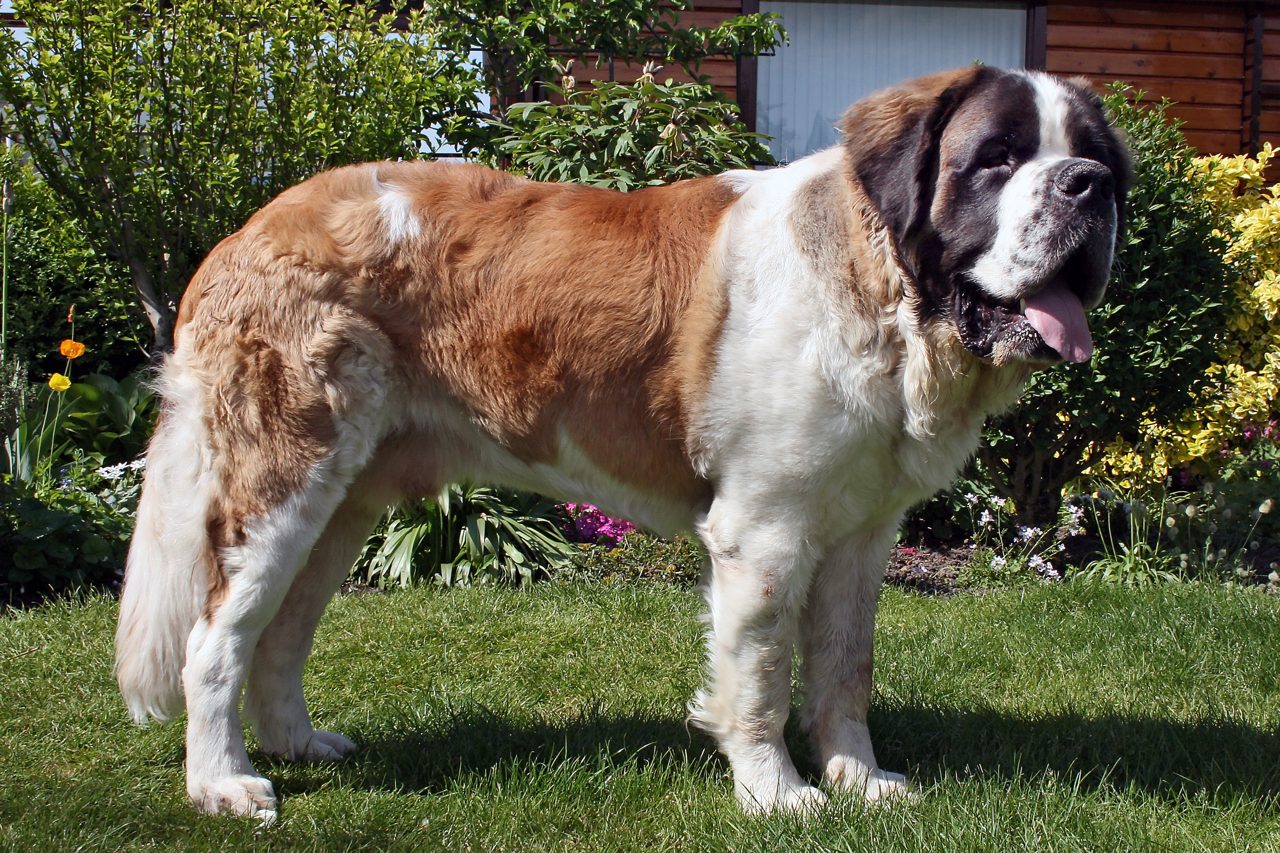
Which Mendelian variants matter most for Saint Bernards?
Saint Bernards tested in the Donner cohort (n=721) show a remarkably low burden of screened Mendelian variants. The variants listed above account for the confirmed carriers in the Donner cohort. None reach 2% frequency. The breed’s genetic bottleneck is real and tight: 26 of the 37 atlas dogs descend from a single 2016 founder cohort.
Cone-Rod Dystrophy (cord1-PRA/crd4)
Cone-rod dystrophy in Saint Bernards is autosomal recessive with incomplete penetrance, affecting photoreceptor function and causing progressive vision loss. Saint Bernards carry the variant at 0.56% frequency (Donner 2023, n=720).
Testing is available. The gene implicated is RPGRIP1.
Collie Eye Anomaly (CEA)
Collie eye anomaly in Saint Bernards is autosomal recessive. It causes abnormal development of the choroid and retina, ranging from asymptomatic to vision-threatening depending on severity. Saint Bernards carry the variant at 0.35% frequency (Donner 2023, n=721).
Testing is available. The gene is NHEJ1.
How should I test my Saint Bernard?
The carrier frequencies are so low that routine screening of these variants (DM, cystinuria, cord1-PRA, CEA, prcd-PRA, and the two DCM-related variants) is a courtesy to the breed, not an urgent necessity for most owners. For breeding stock, a panel covering these six is the standard practice. The Orthopedic Foundation for Animals recommends hip and elbow screening as well, given the breed’s size.
What should I feed a Saint Bernard?
Feeding a Saint Bernard well means feeding for a breed that typically reaches 140 to 180 pounds at adulthood (AKC breed standard), grows to full size over roughly 18 to 24 months, and carries a median lifespan of 9.3 years (atlas data). The growth rate is steep and the joint load is high.
Controlled calcium and phosphorus during growth are non-negotiable. Saint Bernard puppies undergo one of the fastest growth trajectories in the dog world. The National Research Council’s 2006 nutrient standards recommend a calcium-to-phosphorus ratio of 1.1:1 to 2:1 and an absolute calcium level of 1.2% to 1.8% of dry matter for large-breed puppies. A formulation designed for giant-breed growth, not all-life-stages, is the right choice for the first 18 months. Excess calcium during growth predisposes to developmental orthopedic disease and joint dysplasia; undershooting is equally harmful. Work with a veterinarian or board-certified veterinary nutritionist to match the formula to the pup’s growth curve.
Adult-life weight management is the single largest determinant of joint longevity and lifespan. Saint Bernards are prone to obesity, which compounds hip and elbow stress. The breed’s 9.3-year median lifespan is already among the shortest of large breeds. Overweight dogs of giant breeds develop mobility problems earlier and face shorter lifespans, a pattern documented across large-breed cohorts (German et al. 2012, Vet J 192:428-434). Measure portions against the dog’s actual activity level, not the kibble bag’s guidelines. A lean body condition score (3/9 on the Purina scale, visible ribs without pressing) extends years.
Cardiac screening is essential; feeding adjustments follow veterinary findings. Saint Bernards are a giant breed with a real incidence of dilated cardiomyopathy, though the substrate shows variant carriers are rare (all at <0.1%). A baseline cardiac evaluation at age 3 to 4 and periodic re-screening thereafter is a reasonable precaution for a giant breed; consult your veterinarian or the ACVIM cardiology consensus guidelines for specifics. If a vet detects a murmur or cardiomegaly, a taurine-supplemented adult formula becomes the default; discuss specific targets with a board-certified veterinary nutritionist or cardiologist. Grain-inclusive formulations with proven taurine supplementation are the conservative choice.
The cystinuria carrier frequency is so low (0.97%) that diet-based stone prevention is not a breed-wide concern. If your Saint Bernard is identified as a two-copy carrier, a low-protein, alkalinizing diet and regular urinalysis monitoring are the management tools.
What we don’t know
The Saint Bernard cohort in the Donner study is small (37 atlas dogs, though 721 were genotyped). The founder structure is very tight (26 of 37 from a single 2016 source). We do not yet know whether this genetic narrowness masks additional recessive-disease risk in the breeding population, or whether the breed’s limited public health reporting simply reflects the fact that no large-scale prospective health survey has been conducted in Saint Bernards the way the Golden Retriever Lifetime Study was.
The breed’s lifespan (9.3 years median) is short for a giant breed. The causes are not yet clear from published literature. Possible contributors include cancer incidence, cardiac disease, joint failure, and founder effects, but no comprehensive epidemiological analysis has been published.
Frequently asked questions about Saint Bernards
How long do Saint Bernards live? Cited life expectancy is 9.3 years (McMillan 2024 / VetCompass, n=1,129, 95% CI 9 to 9.8).world atlas data). Giant breeds generally live 7 to 9.3 years (McMillan 2024 / VetCompass); Saint Bernards sit at the shorter end of that range.
What is the most common genetic disease in Saint Bernards? Based on the Donner cohort (n=721), degenerative myelopathy is the most common, at 1.2% carrier frequency. It is an autosomal-recessive condition that causes progressive spinal-cord degeneration in middle-aged to older dogs.
Should I do a DNA test on my Saint Bernard? For breeding stock, yes. A panel covering degenerative myelopathy, cystinuria, cone-rod dystrophy, Collie eye anomaly, and the two DCM variants is standard. The carrier frequencies are low, but genetic testing helps maintain transparency in breeding decisions.
Are Saint Bernards prone to hip dysplasia? Yes. The Orthopedic Foundation for Animals reports a 25.2% hip dysplasia prevalence among Saint Bernards (OFA breed statistics, ofa.org/diseases/hip-dysplasia/). Elbow dysplasia is also present at meaningful frequency. Screening of both hips and elbows is recommended for breeding stock.
What size will my Saint Bernard puppy be at adulthood? Most Saint Bernards reach 140 to 180 pounds (AKC breed standard). Feeding for that trajectory from birth is essential.
What is the best diet for a Saint Bernard? A large-breed puppy formula with controlled calcium (1.2% to 1.8% dry matter) and a calcium-to-phosphorus ratio of 1.1:1 to 2:1 during growth. After 18 months, a high-quality adult maintenance formula with portion control for weight management. If cardiac disease is detected, taurine supplementation becomes a priority.
Do Saint Bernards need any special exercise routine? Saint Bernards are a working-origin breed but modern pets require moderate, consistent exercise appropriate to their age and condition. Puppies should not do heavy jumping or long-distance running until growth plates close (around 18 to 24 months), as premature exertion compounds dysplasia risk. Adult Saint Bernards are prone to heat intolerance due to their size and coat, so exercise in cool conditions is important.
Are Saint Bernards good with children? Saint Bernards have a long history as rescue and family dogs and are generally patient with children. Their large size means supervision with young children is always necessary to avoid accidental injury from a tail or a lean. Breed temperament is not a genetic concern in this population.