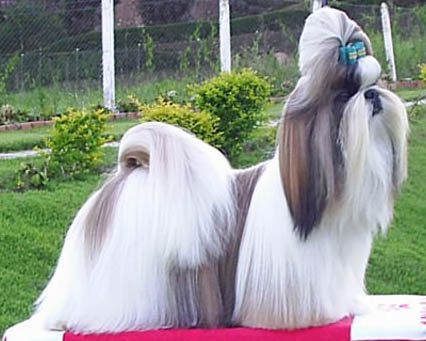
Which Mendelian variants matter most for Shih Tzus?
The Mendelian-disease table above lists variants screened in 7,527 Shih Tzus (Donner 2023). Two matter most by carrier frequency and impact.
Prekallikrein Deficiency
Prekallikrein deficiency in Shih Tzus is an autosomal recessive blood-clotting disorder caused by a KLKB1 variant. Affected dogs have prolonged bleeding times after injury or surgery. 10.5% of Shih Tzus carry the variant (n=7527). Severity is moderate; affected dogs are manageable with monitoring and transfusion protocols if needed, but the condition matters for surgical planning.
Testing is available. Breeders can avoid affected offspring through carrier screening.
How should I test my Shih Tzu?
A breed-specific panel covering CDDY (chondrodystrophy/IVDD), SOD1 (degenerative myelopathy), and KLKB1 (prekallikrein deficiency) is the high-yield starting point for breeding stock. Low-frequency variants like Ehlers-Danlos Syndrome (TNXB) and Bald Thigh Syndrome (IGFBP5) are each observed at 0.59% in a small sample (n=85, Donner 2023) and can be added if your lab includes them. Most commercial CLIA-accredited labs offer these as a combined panel. The 0.59% carrier frequency for Ehlers-Danlos Syndrome is based on a small sample (n=85), so the true population frequency is uncertain; ask your lab specifically whether the TNXB variant is included (Donner 2023).
What should I feed a Shih Tzu?
Feeding a Shih Tzu well means feeding around the breed’s spinal fragility and toy-size metabolism. Shih Tzus weigh 9 to 16 pounds at adult size, per the AKC breed standard. The CDDY variant at 16.4% carrier frequency means the breed carries real intervertebral disc disease risk despite normal leg length. Small toy breeds have limited glycogen reserves, and skipped meals can cause hypoglycemia (Kirk’s Current Veterinary Therapy, or consult your veterinarian for breed-specific guidance). Food choices matter more per pound of body weight than they do for larger breeds.
Toy-breed hypoglycemia is the first feeding priority. A 10-pound Shih Tzu fed twice daily rather than once daily, with consistent meal timing, avoids the blood-sugar crashes that can force emergency clinic visits. The NRC 2006 baseline for adult maintenance in dogs weighing 10 pounds is roughly 300 to 350 kilocalories per day. Divide that into two meals rather than one. Consistency matters more than the specific kibble for a toy breed.
Joint and spine support during growth matters because of the CDDY carrier frequency. A toy-breed puppy formula with calcium controlled between 1.1:1 and 2:1 calcium-to-phosphorus ratio (NRC 2006) supports skeletal development without over-loading growth plates. This is less critical for Shih Tzus than for giant breeds, but the IVDD risk in middle age is reason enough to avoid excess calcium in puppyhood. Adult-life weight management, keeping a Shih Tzu lean to reduce load on discs, is the other half of spinal care.
Coat quality reflects nutrition more visibly in Shih Tzus than in many breeds. The breed standard calls for a long, flowing coat. Omega-3 and omega-6 polyunsaturated fatty acids are foundational; a diet with fish meal or flaxseed, and a ratio of omega-6 to omega-3 around 5:1 to 10:1, supports skin and coat health (NRC 2006). Grain-inclusive or grain-free matters less than consistent fat and protein quality. Shih Tzus do not appear at notable frequency in the FDA’s 2018 grain-free DCM investigation (FDA, “FDA Investigation into Potential Link between Certain Diets and Canine Dilated Cardiomyopathy,” 2018, fda.gov), so the cardiac-risk signal that shapes Golden Retriever feeding does not apply here.
What we don’t know
The true prevalence of symptomatic IVDD in the Shih Tzu population is not yet well characterized. We know 16.4% carry the CDDY variant. We do not yet know what fraction of those carriers develop clinical disc herniations, at what age, or how environmental factors (weight, exercise, furniture height) modify risk in this breed specifically. Breed-club records may hold that data; the peer-reviewed literature has not yet produced a Shih Tzu-specific IVDD epidemiology study.
Prekallikrein deficiency is real in Shih Tzus at 10.5% carrier frequency, but the clinical impact is not well characterized in this breed’s population. We do not have breed-specific bleeding-time data or a published case series describing age of onset or progression in affected Shih Tzus.
The atlas whole-genome sequencing cohort includes 38 Shih Tzus, which limits the power to detect rare variants or breed-specific environmental modifiers. The Mendelian variant screening covered 7,527 dogs (Donner 2023), a much larger base for disease-frequency estimates. Larger cohorts would clarify the spinal, cardiac, and hematologic landscape for the breed.
Frequently asked questions about Shih Tzus
Are Shih Tzus prone to back problems? Yes. The CDDY carrier frequency is 16.4%, which predisposes to intervertebral disc disease. Avoid letting your Shih Tzu jump on and off furniture, maintain lean weight, and watch for rear-limb weakness or reluctance to move.
How long do Shih Tzus live? Cited life expectancy is 12.8 years (McMillan 2024 / VetCompass, n=12,007, 95% CI 12.6 to 12.9). Individual dogs vary; longevity depends on genetics, weight, and healthcare quality.
What is the most common genetic disease in Shih Tzus? Degenerative myelopathy and chondrodystrophy-related intervertebral disc disease are the most common genetic risks by carrier frequency (17.1% and 16.4%, respectively; Donner 2023, n=7527).
Should I do a DNA test on my Shih Tzu? For breeding stock, yes. A panel covering CDDY, SOD1 (degenerative myelopathy), and KLKB1 (prekallikrein deficiency) is essential. Pet owners considering spinal risk can test for CDDY and SOD1 to understand their dog’s genetic background and make informed decisions about exercise and weight management.
What should I feed my Shih Tzu? Feed twice daily to avoid hypoglycemic crashes in this toy breed. Use a complete, balanced kibble with controlled calcium (1.1:1 to 2:1 ratio to phosphorus) during puppyhood. Maintain lean weight throughout life to reduce load on the spine. Quality protein and fat matter more than grain inclusion or exclusion for this breed.
Are Shih Tzus good with kids? Shih Tzus are affectionate and sturdy enough for older children, but the breed’s small size means rough play or drops from height carry risk of spinal injury (given the 16.4% CDDY carrier frequency). Supervision with young children is necessary.
What are the nearest genetic relatives to Shih Tzus? Pekingese, Tibetan Terrier, Tibetan Spaniel, and Pug are among the nearest documented genetic relatives of Shih Tzus (Parker et al. 2017, Cell 169:945-959). Several of these share CDDY risk and toy-breed feeding challenges.
Do Shih Tzus have eye problems? Progressive rod-cone degeneration (prcd-PRA) occurs at very low frequency in Shih Tzus (0.21% carrier frequency, Donner 2023, n=7521). It is not a breed-defining concern, but testing is available if you are screening for all recessive eye variants.