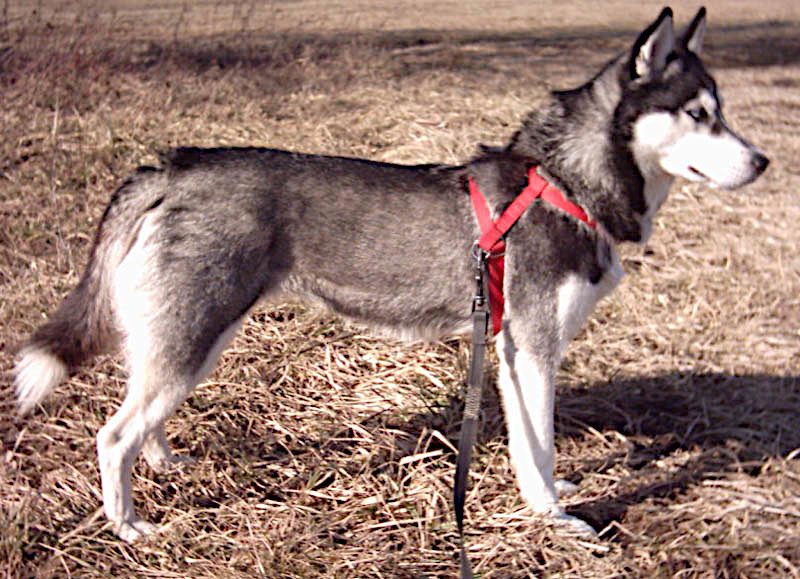
Which Mendelian variants matter most for Siberian Huskies?
The Mendelian-disease table above lists 194 variants screened in 9,035 Siberian Huskies (Donner 2023). The carrier frequencies are low across the board, well under 1% for most conditions, which reflects the breed’s relatively tight genetic structure. None reaches the threshold of widespread concern that would reshape a routine screening recommendation. Still, twelve variants appear at observable carrier frequency.
How should I test my Siberian Husky?
Given the low carrier frequencies across the Mendelian panel, a breed-specific screening panel is optional rather than critical. If you are a breeder, a panel covering DM, MDR1, and the two retinal dystrophies (PRCD and CORD1) is the reasonable starting point. For a pet-only dog, testing is less urgent unless there is family history for a specific condition.
What should I feed a Siberian Husky?
Siberian Huskies were bred for distance and cold, and their metabolism still expects work. A pet Husky eating maintenance kibble in a temperate house is being fed for a job they aren’t doing. Weight management becomes the primary nutritional challenge.
Joint care should follow large-breed guidelines even though Huskies sit at the upper end of the medium-size range. Adult Huskies weigh 45 to 60 pounds. Growth from puppy to adult is moderately rapid but not the extreme scaling of giant breeds. A large-breed puppy formulation with calcium-to-phosphorus ratio between 1.1:1 and 2:1 aligns with NRC 2006 recommendations. Monitor body condition monthly during growth; the breed’s working heritage can mask overfeeding until adulthood hits.
The working-dog metabolism demands high-quality protein and fat. Huskies thrive on formulations with 25% to 30% protein and 15% to 20% fat as fed. The breed does well on both grain-inclusive and grain-free diets; no breed-specific DCM signal has been reported for Siberian Huskies in the FDA’s 2018 and 2022 grain-free diet advisories (FDA 2018, FDA 2022). The choice between the two depends on individual dog response. Watch for coat quality and energy level as indicators of whether a diet is matching the breed’s high metabolic expectations.
Weight gain is the most common nutritional failure in pet Huskies. A working sled dog can burn over 10,000 kcal per day in racing conditions (Hinchcliff et al. 1997, J Nutr 127:2494S-2502S). A pet Husky in a suburban yard needs a fraction of that, and portion control is essential to prevent weight gain. Free-feeding is a near-guarantee of obesity by age three. Measure portions by the breed-club standard: feed to body condition, not to the bowl recommendation on the bag.
What we don’t know
The Siberian Husky atlas is built from 30 dogs across 2 sub-populations. That is a small foundation for breed-wide inference. Carrier frequencies are reliable for the variants reported, but the breed’s true genetic structure, whether there are undetected sub-populations with different allele frequencies, whether rare variants exist in field lines that didn’t make it into the sequencing cohort, remains partly opaque. A larger, geographically diverse atlas would refine those estimates.
The interaction between MDR1 carrier status and actual ivermectin sensitivity at any dose in Huskies specifically is incompletely studied. The MDR1/ABCB1 research base is strongest in Collies, but the variant mechanism is consistent across breeds. A Husky with a positive test should avoid ivermectin-class drugs above the heartworm-prevention dose; breed-specific penetrance data from Husky field populations has not been published to date.
Frequently asked questions about Siberian Huskies
What is the most common genetic disease in Siberian Huskies? Degenerative myelopathy is the most frequent Mendelian condition by carrier frequency, with 0.69% of the breed carrying the variant (Donner 2023, n=9,035). Affected dogs develop progressive hind-limb weakness, typically in later life (Wininger et al. 2011, J Vet Intern Med 25:1014-1021). Most conditions in Huskies are well below 1% carrier frequency.
Should I do a DNA test on my Siberian Husky? For breeding stock, a panel covering DM and the two retinal dystrophies (PRCD and CORD1) is reasonable. For a pet dog, testing is optional unless there is family history for a specific condition or you are planning future litters.
Are Siberian Huskies prone to weight gain? Yes. The breed was selected for distance work in extreme cold and has a metabolism that expects that job. Pet Huskies in temperate climates gain weight easily on standard portions. Measured feeding and regular body-condition scoring are essential.
How long do Siberian Huskies live? Cited life expectancy is 11.9 years (McMillan 2024 / VetCompass, n=4,453, 95% CI 11.7 to 12). Individual dogs vary; the 11.9-year atlas median reflects the full population, and well-managed dogs may exceed it.
What is the best diet for a Siberian Husky? High-protein (25-30%), moderate-to-high fat (15-20% as fed) formulations that match the breed’s working heritage. Both grain-inclusive and grain-free diets work well; no breed-specific DCM signal has been reported for Siberian Huskies in the FDA 2018 and 2022 grain-free diet advisories (FDA 2018, FDA 2022). Feed to body condition, not appetite. Free-feeding without portion control is strongly associated with obesity in low-activity dogs (NRC 2006).
Are Siberian Huskies good with kids? Siberian Huskies have high prey drive but low human-directed aggression. They are commonly kept in families with children. Supervision around small children is standard practice for any breed this size. Prey-drive training toward other small animals (cats, rabbits) should start early.
What is the most common health problem in Siberian Huskies? Obesity and joint stress from excess weight are the most common nutritional and musculoskeletal issues. Hip dysplasia and other joint disease are breed concerns but not dominant. Genetic disease is rare at the Mendelian level.
Do Siberian Huskies need a lot of exercise? Yes. The breed was selected for all-day work in snow. A pet Husky needs a minimum of one to two hours of vigorous aerobic activity daily. Under-exercised Huskies develop destructive behavior and weight gain. High-prey-drive play (fetch, spring-pole work, lure coursing) is better suited to the breed than treadmill walking.